×
×
In the world of bespoke tailoring and ready-to-wear manufacturing, the "Super S" number on the selvedge is often a double-edged sword.
For many end-consumers, a higher number implies a better suit. However, for sourcing managers and brand owners, the equation is far more complex.
While a Super 180s offers an undeniably luxurious hand, its fragility in daily wear can lead to premature fabric failure—and ultimately, customer returns.
At Light Source Couture, after analyzing data from over 25 years of garment production and thousands of export orders, we have identified a clear "Golden Zone" for business suiting.
This article breaks down the technical reality of wool grading and explains why Super 110s and 120s remain the most scientifically balanced choice for scalability, durability, and profit margin in the modern menswear market.
To make smarter sourcing decisions, we must first strip away the marketing hype.
The "Super" grading system (e.g., Super 100s, 120s, 150s) refers strictly to the diameter of the wool fiber, measured in microns. It does not measure the weight, the weave density, or the quality of the finishing.
The PM’s Perspective: Finer is not always better; finer is simply finer.
As the fiber diameter decreases, the yarn becomes softer but also more prone to breakage under tension.
For a suit intended to be worn once a month to a gala, Super 150s is appropriate. For a suit intended to survive a weekly commute and 10-hour workdays, extreme fineness becomes a liability.
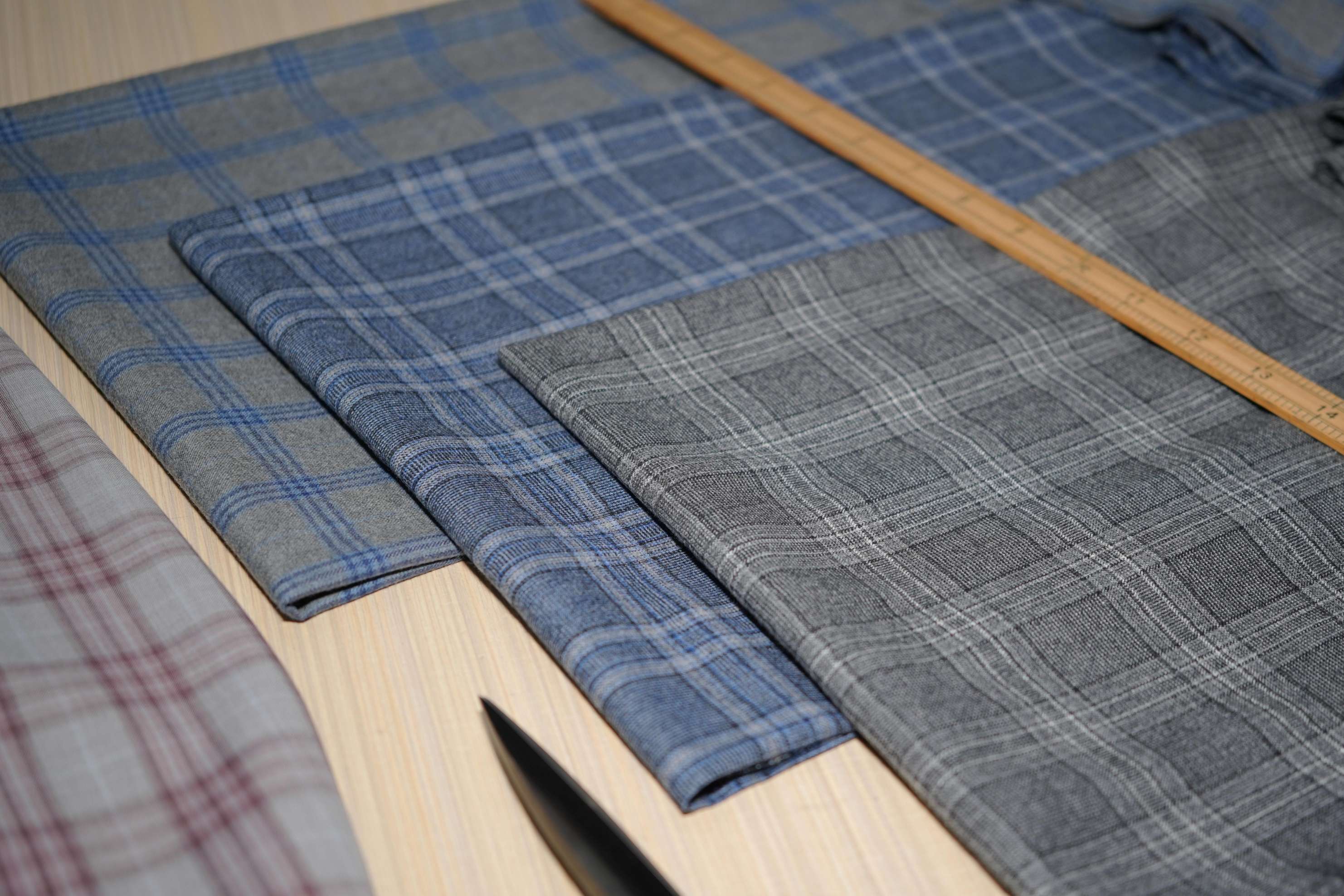
Why do we steer our B2B partners towards the 110s-120s range? It comes down to the Martindale Cycle (abrasion resistance).
Internal testing shows that a standard Super 110s wool fabric can withstand significantly more friction cycles than a delicate Super 150s before showing signs of wear or pilling.
For a Made-to-Measure (MTM) brand, the most expensive cost is not the fabric—it is the Cost of Customer Acquisition (CAC).
If a client's trousers wear out in the inner thigh area after only six months because the fabric was "too luxurious," you lose that client.
Super 110s-120s offer the optimal balance: they feel soft enough to justify a premium price point but are tough enough to build long-term customer loyalty.
While customers obsess over the "Super" number, seasoned sourcing managers know that structural integrity comes from three often-overlooked specifications: Weight, Ply, and Weave.
At Light Source Couture, we advise our partners to prioritize these metrics.
In the global garment trade, inventory turnover is key. We strongly recommend sourcing wool fabrics in the 260g/m² to 290g/m² range.
A Super 120s fabric is only as good as its yarn construction. We exclusively recommend 2-ply yarns for both the warp and weft.
A 2-ply Super 110s suit uses the tension between the twisted yarns to "spring back" to its original shape. For your end-consumers who travel for business, this feature is a stronger selling point than a higher Super number.
For your core business lines, we recommend a Twill weave (recognizable by its diagonal rib).
Twill weaves are tighter and heavier than plain weaves, offering better drape and higher durability against friction—crucial for trousers.
To help you make an informed sourcing decision, we have compiled performance data based on our internal QC testing and client feedback loops over the last 5 years.
| Feature | Super 110s - 120s (Our Recommendation) |
Super 150s - 180s (Luxury Range) |
Wool/Poly Blends (Entry Level) |
|---|---|---|---|
| Micron Diameter | 17.5 – 18.5 microns | 15.0 – 16.0 microns | N/A (Synthetic mix) |
| Martindale Abrasion |
20,000+ Cycles (High Durability) |
12,000 – 15,000 Cycles (Delicate) |
40,000+ Cycles (Industrial Grade) |
| Wrinkle Recovery |
Excellent (Natural Spring) |
Good (Requires Steaming) |
Excellent (Artificial Memory) |
| Hand Feel | Soft & Substantial | Silky & Delicate | Smooth but Plastic-like |
| Profit Margin Potential | ⭐⭐⭐⭐⭐ (Highest) | ⭐⭐⭐ (High Cost) | ⭐⭐⭐⭐ (Volume Driven) |
| Re-order Rate | Highest (85%) | Medium (40%) | High (70%) |
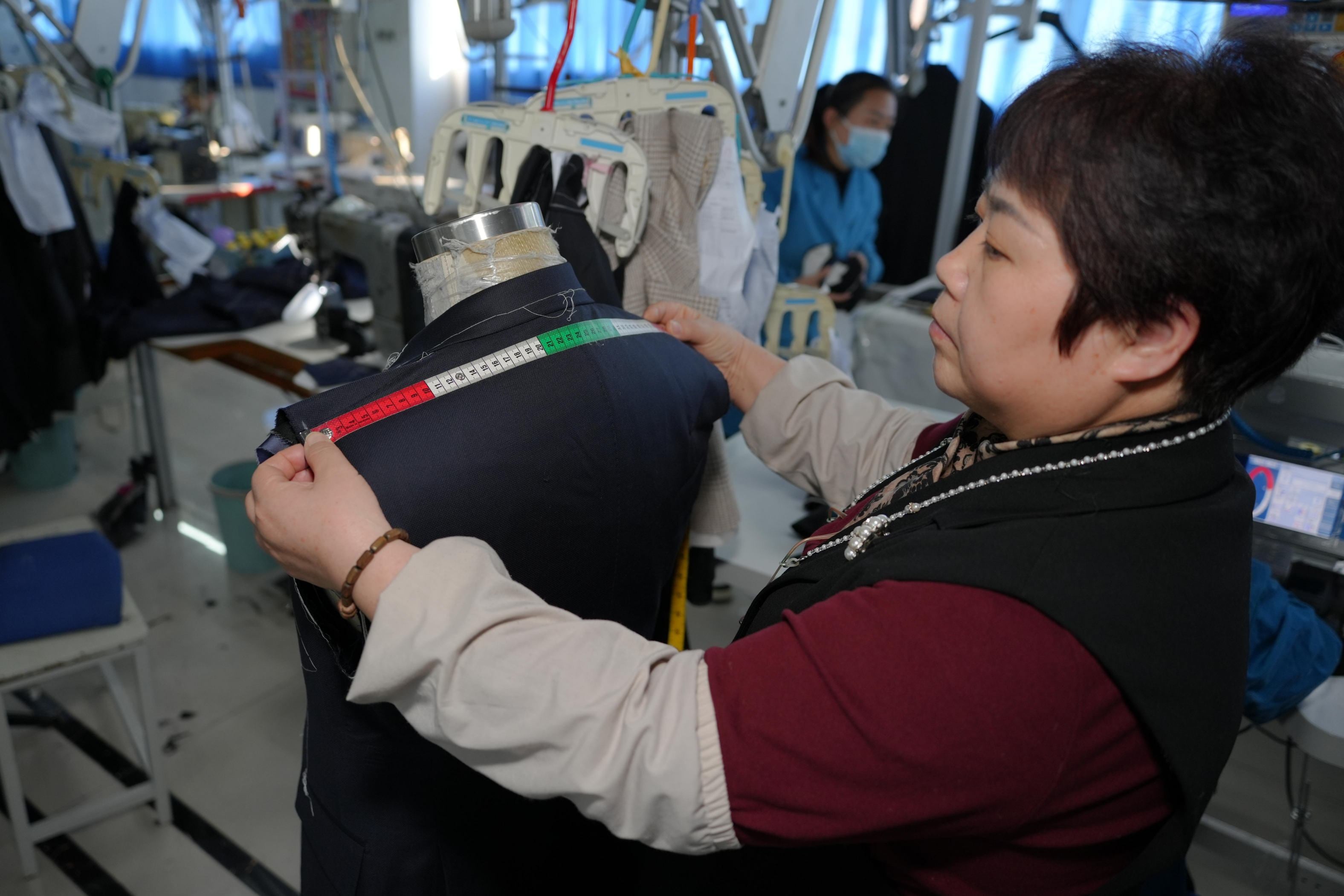
Choosing the right yarn is only step one. As a manufacturer with 25 years of heritage, Light Source Couture applies rigorous processing standards to ensure the fabric performs as promised.
Data doesn't lie. While Super 150s+ fabrics have their place in ultra-luxury bespoke, Super 110s and 120s represent the highest ROI for scalable fashion brands.
They offer the tactile softness customers expect from a premium product, without the fragility that leads to dissatisfaction.
By choosing our Core 120s Collection, you are not just buying fabric; you are buying customer retention and brand reputation.
Ready to upgrade your fabric library? Contact our export team today to request physical swatches of our 2026 Core Business Collection. Experience the balance of luxury and performance firsthand.
 Hot News
2026-09-07
2026-06-23
2026-06-22
2026-06-04
2026-04-23
2026-03-23
Room 610, Building 1, Lvjing Business Plaza, Yuexi Sub-district, Wuzhong Economic Development Zone, Suzhou
Copyright © 2026 Light Source Couture. All rights reserved. Privacy Policy

 EN
EN