
 EN
EN



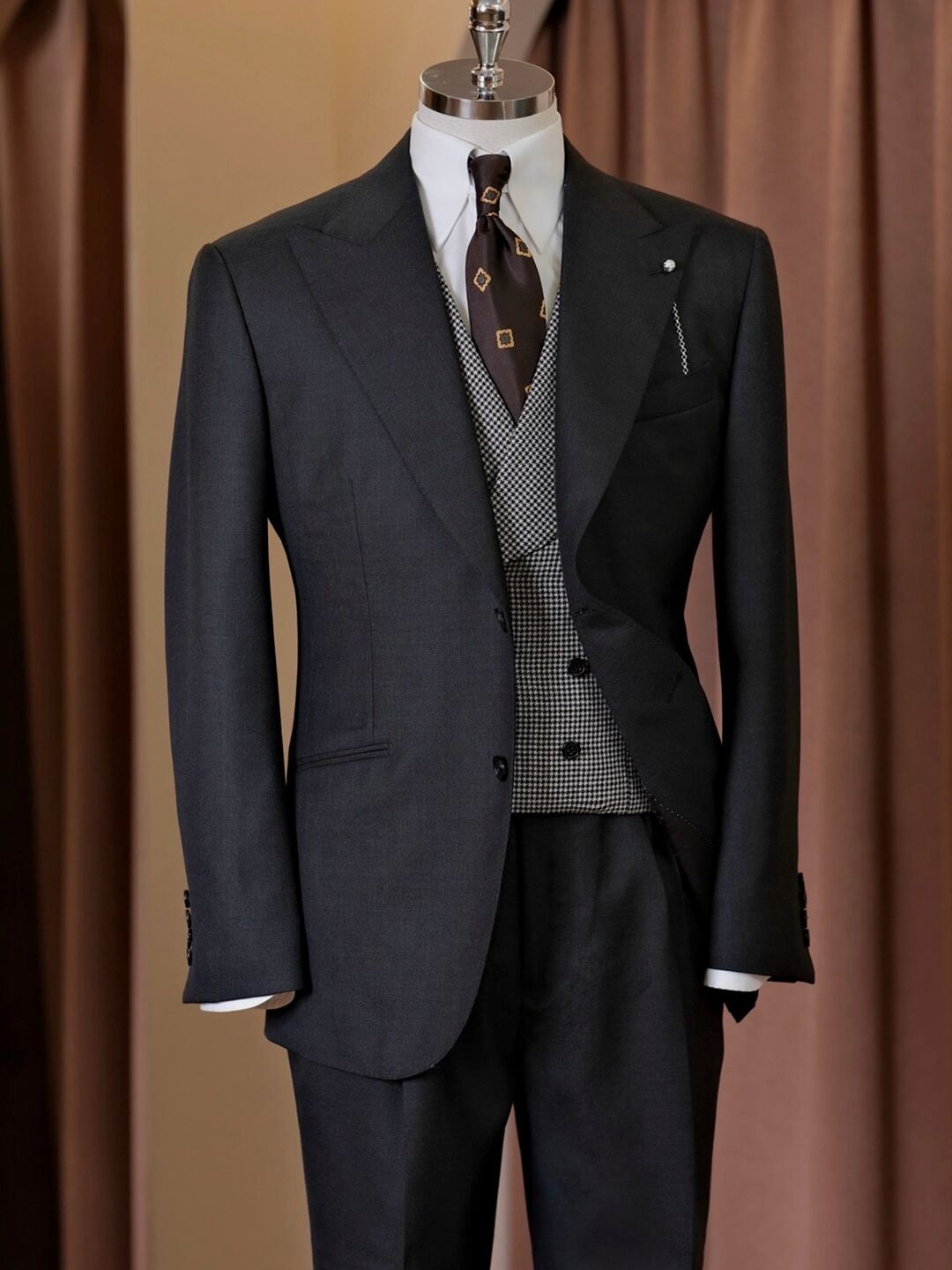
When discerning buyers invest in handmade bespoke suits, they are not simply purchasing a garment — they are commissioning a construction philosophy. Every stitch, every seam, and every interior detail reflects hours of skilled craft applied specifically to the individual wearer. Yet for many buyers new to this world, it can be difficult to articulate exactly what separates a truly handmade bespoke suits from a well-marketed ready-to-wear or made-to-measure alternative. The answer lies in the finishing details, those precise, often invisible touches that define the standard of the work.
Handmade bespoke suits carry a language of quality that speaks quietly but unmistakably to those who know what to look for. The finishing details are not decorative afterthoughts — they are structural and aesthetic signatures that reveal the method of construction, the skill of the maker, and the integrity of the commission process. Understanding these details arms the buyer with the knowledge to evaluate what they are truly receiving and why it justifies a fundamentally different investment than off-the-rack tailoring.
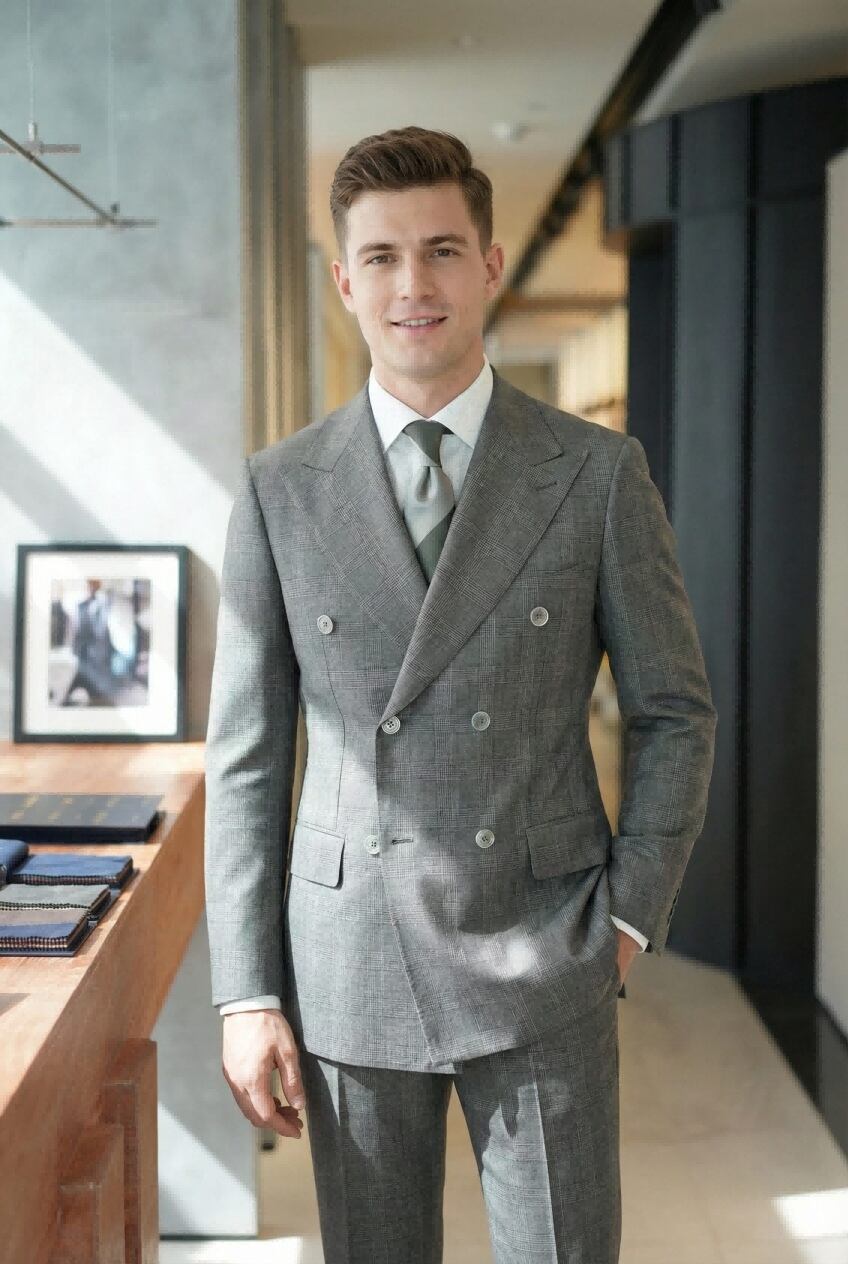
The Hand-Stitched Canvas and Its Role in Structure
Floating Canvas Versus Fused Interlining
One of the most consequential distinctions in handmade bespoke suits is the construction of the chest canvas. In a fully canvassed bespoke jacket, a layer of horsehair or wool canvas is hand-stitched directly to the outer fabric, floating freely between the outer shell and the lining. This canvas is not glued — it is sewn with a technique known as pad stitching, where the tailor creates thousands of tiny, angled stitches by hand to shape and mold the chest into a form that complements the wearer's specific torso.
Mass-produced garments, by contrast, use a fused interlining — a heat-bonded layer that creates a stiff, uniform shape regardless of the body wearing it. Over time, fusing can delaminate, creating a bubbled or rippled appearance in the chest. A floating canvas, by contrast, continues to adapt to the wearer's body with each wearing, breathing and moving organically with posture and movement. This is a defining structural quality of handmade bespoke suits and one of the clearest diagnostic markers between genuine bespoke construction and imitation.
Pad Stitching and Lapel Roll
The lapels of handmade bespoke suits are shaped entirely by hand through pad stitching. The tailor rolls the lapel over a tailor's ham or their own hand and sets hundreds of individual stitches to create a soft, natural break that falls exactly where the wearer's chest dictates. This results in a lapel that rolls rather than folds, giving the jacket a three-dimensional, sculptural quality rather than a pressed-flat appearance.
The roll line — the point at which the lapel turns back — varies from person to person based on shoulder slope, chest depth, and preference. In handmade bespoke suits, this line is tailored to the individual, meaning no two jackets share the same lapel behavior. This organic quality is difficult to replicate mechanically and remains one of the most telling signs of genuine bespoke construction when examining a finished garment.
Sleeve and Buttonhole Finishing
Surgeon's Cuffs with Working Buttonholes
The sleeve cuff of handmade bespoke suits traditionally features what are known as surgeon's cuffs — sleeve buttons that actually function, meaning they can be unbuttoned to reveal a working cuff opening. In lesser garments, sleeve buttons are purely ornamental and are sewn through the sleeve fabric with no actual opening behind them. The distinction is immediately apparent to a trained eye and serves as a reliable quality indicator.
More importantly, the buttonholes on handmade bespoke suits are stitched by hand. Hand-sewn buttonholes differ from machine-made versions in both appearance and durability. A hand-sewn buttonhole displays a bar tack at each end, a slightly irregular but controlled stitch pattern, and a silk thread finish that ages elegantly rather than fraying. The edges are clean and the thread tension is set by feel rather than by machine calibration, producing a result that remains structurally sound through decades of use.
Buttons, Thread, and Sleeve Pitch
In handmade bespoke suits, buttons are often sourced from natural materials — horn, mother-of-pearl, or corozo — and sewn individually with a shank thread beneath each button. This shank creates space between the button and the cloth, allowing the button to sit naturally through a buttonhole without pulling the fabric flat. The thread used to attach each button is wound tightly to form a visible thread stem, a detail that immediately distinguishes hand-applied buttons from machine-attached ones.
Sleeve pitch — the angle at which the sleeve is set into the armhole — is also set by hand in bespoke construction. The tailor evaluates the wearer's natural arm hang and basts the sleeve in place before sewing, adjusting until the sleeve falls without pulling across the back or bunching at the front. This is a subtle detail, but an incorrectly pitched sleeve creates persistent diagonal creases that no amount of pressing can fully eliminate. Correct sleeve pitch in handmade bespoke suits results in a jacket that hangs cleanly when the arms are relaxed and moves freely when raised.
Interior Construction and Lining Details
The Pick Stitch and Finished Seams
Along the edges of the lapels, the collar, and the front facings of handmade bespoke suits, a fine hand-sewn edge stitch known as the pick stitch is often visible. This stitch runs parallel to the edge of the garment, typically set two to four millimetres inward, and serves both a structural and aesthetic function. Structurally, it secures the canvas to the outer fabric without compressing the cloth. Aesthetically, it signals unmistakably that the finishing was completed by hand.
The interior seams of handmade bespoke suits are typically finished by hand as well. Seam allowances may be hand-felled to the canvas or lining, and the lining itself is typically attached by a floating catchstitch at the hem rather than being sewn down flat. This allows the lining to move with the outer shell independently, reducing stress on the seams and extending the garment's lifespan considerably.
The Hand-Finished Collar and Neckline
The collar of a jacket must lie flat against the neck without gaping at the back or pulling forward at the points. In handmade bespoke suits, the undercollar is shaped from melton or felt, pad-stitched to a precise curve, and then the top collar is applied over it and fell-stitched by hand along the joining seam. This results in a collar that conforms naturally to the curve of the neck and maintains its shape through wear and pressing.
The neckline seam — where the collar meets the jacket body — is one of the most technically demanding areas of tailoring. In bespoke work, this seam is carefully clipped, turned, and pressed before being hand-stitched closed, producing a clean, seamless join with no visible machine topstitching. It is a detail that sets the back view of handmade bespoke suits apart from any machine-finished alternative.
Trouser Construction and Finishing
Waistband and Seat Seam Detailing
The trousers that accompany handmade bespoke suits are constructed to the same standard as the jacket. The waistband is typically cut from the same cloth and finished with a curtain lining on the interior to prevent the trouser from rolling outward at the waist. In many bespoke houses, the waistband is secured at each end with a hand-sewn bar tack, reinforcing the stress points that receive the most strain during daily wear.
The seat seam — the curved back seam joining the two trouser panels — is a critical structural seam. In handmade bespoke suits, this seam is cut with sufficient allowance to accommodate future adjustments, and the seam itself may be finished with a fell stitch on the interior for added integrity. The curve of the seat is shaped specifically to the wearer's measurements, meaning the trouser sits without pulling across the seat or creating excess fabric behind the thighs.
Trouser Hem and Break
The trouser hem in handmade bespoke suits is always finished by hand using a slip stitch that catches only the inner threads of the outer fabric, leaving no visible stitching on the face of the cloth. The trouser break — the amount of fabric that rests on the shoe — is set according to the wearer's preference and shoe height, with the tailor marking and trimming the hem after evaluating the full standing posture of the client.
These are not decisions made by measurement tables alone. They involve the tailor's judgment, the client's lifestyle, and the particular fall of the chosen cloth. The result is a trouser that fits and hangs with a precision that no automated hem process can replicate. It is this accumulated judgment — applied across every detail — that defines handmade bespoke suits as a separate category entirely from other tailoring approaches.
Cloth Handling and Pattern Matching
Matching Across Seams and Pockets
When a checked, striped, or patterned cloth is used for handmade bespoke suits, the tailor must cut and align each panel so that the pattern continues unbroken across every seam — at the side seams, the shoulder seams, the pocket flaps, and the sleeve head. This requires significant additional cloth and considerable skill in cutting, as each panel must be individually positioned before cutting to ensure the pattern aligns in all directions simultaneously.
Pattern matching at the breast pocket and side pockets is particularly demanding. The pocket flap must be cut from a position in the cloth that mirrors the pattern of the jacket front directly beneath it, so that when the flap is closed, the pattern reads as continuous. In handmade bespoke suits made from grid or windowpane checks, this alignment becomes an immediate visible indicator of the cutter's skill and the amount of cloth invested in the commission.
Bias Cutting and Grain Alignment
Collar undercollars and certain pocket facings in handmade bespoke suits are frequently cut on the bias — at a 45-degree angle to the grain of the fabric. This technique allows the cloth to curve naturally around the neck without buckling and produces a smoother, more fluid fit along curved seams. Bias cutting requires additional material and careful handling, as bias-cut panels are more prone to stretching during construction.
Grain alignment across the jacket back, chest, and sleeves ensures that the fabric hangs plumb and true. A single panel cut even slightly off-grain will twist or pull as it is worn, creating creases that migrate toward the off-grain side. In handmade bespoke suits, every panel is cut with close attention to grain direction, and any deviation is corrected before the garment is assembled. This is a standard of care that distinguishes bespoke construction from volume cutting.
FAQ
How can I tell if a suit is genuinely handmade bespoke and not just described that way?
Look for a floating canvas in the chest — pinch the chest fabric between your fingers and gently move it; if the outer cloth and lining move independently, the canvas is floating rather than fused. Also check for hand-sewn buttonholes, visible pick stitching along the lapel edge, and working sleeve buttons. These details are difficult and costly to fake and are reliable indicators that the garment is among genuinely handmade bespoke suits.
Do all handmade bespoke suits use the same construction techniques?
Not exactly. Different tailoring traditions — Savile Row, Neapolitan, Milanese — apply varying techniques while all qualifying as bespoke. A Neapolitan jacket may feature a spalla camicia (a gathered shirt sleeve head) and a softer, more draped chest canvas, while a British house may produce a more structured, padded shoulder. What all handmade bespoke suits share is the commitment to individual pattern cutting, multiple fittings, and hand finishing throughout construction.
Why does pattern matching matter so much in bespoke checked suits?
Pattern matching in checked or windowpane cloth is one of the clearest demonstrations of cutting skill and material investment in handmade bespoke suits. A mismatched check at the pocket flap or side seam is immediately visible and signals either a lack of skill or a deliberate reduction in cloth allowance. Perfect pattern alignment across all seams requires both additional yardage and precise, time-consuming layout work — making it a genuine quality marker rather than a superficial aesthetic preference.
Are finishing details in handmade bespoke suits purely aesthetic or do they affect durability?
Many finishing details in handmade bespoke suits directly affect structural longevity. Hand-sewn buttonholes resist fraying far longer than machine-made equivalents. A floating canvas adapts to the body without delaminating the way fused interlinings do. Hand-fell linings reduce stress on interior seams. Generous seam allowances allow for future alterations as the body changes over time. These are not decorative choices — they are engineering decisions that contribute to a garment designed to last decades with appropriate care.
Table of Contents
- The Hand-Stitched Canvas and Its Role in Structure
- Sleeve and Buttonhole Finishing
- Interior Construction and Lining Details
- Trouser Construction and Finishing
- Cloth Handling and Pattern Matching
-
FAQ
- How can I tell if a suit is genuinely handmade bespoke and not just described that way?
- Do all handmade bespoke suits use the same construction techniques?
- Why does pattern matching matter so much in bespoke checked suits?
- Are finishing details in handmade bespoke suits purely aesthetic or do they affect durability?