×
Article Summary: English Summary: India’s textile manufacturing sector recorded strong growth in September 2026, while apparel manufacturing continued to contract. The divergence highlights the different pressures affecting yarn and fabric production, garment manufacturing, export demand and input costs. This article examines the latest Indian industry data, changing US sourcing patterns and structural challenges, then explains what international buyers should evaluate when choosing suppliers for custom suits, made-to-measure programmes and private-label garment production. **
A buyer comparing textile suppliers and garment manufacturers may notice something unusual in India's latest industrial data. Yarn and fabric production are expanding, but the factories that turn materials into finished clothing are facing a very different situation.
This is more than a statistical contrast. It raises a practical question for international apparel buyers: if a country's textile industry is growing, does that automatically mean its garment manufacturing sector is becoming more competitive?
India's latest figures suggest that the answer is no.
On 28 October 2026, India's Ministry of Statistics and Programme Implementation published the September 2026 Quick Estimates of the Index of Industrial Production (IIP).
The figures showed a clear divergence:
These figures come from India's official IIP release, based on the 2022–23 index base. September figures are preliminary estimates and may be revised.
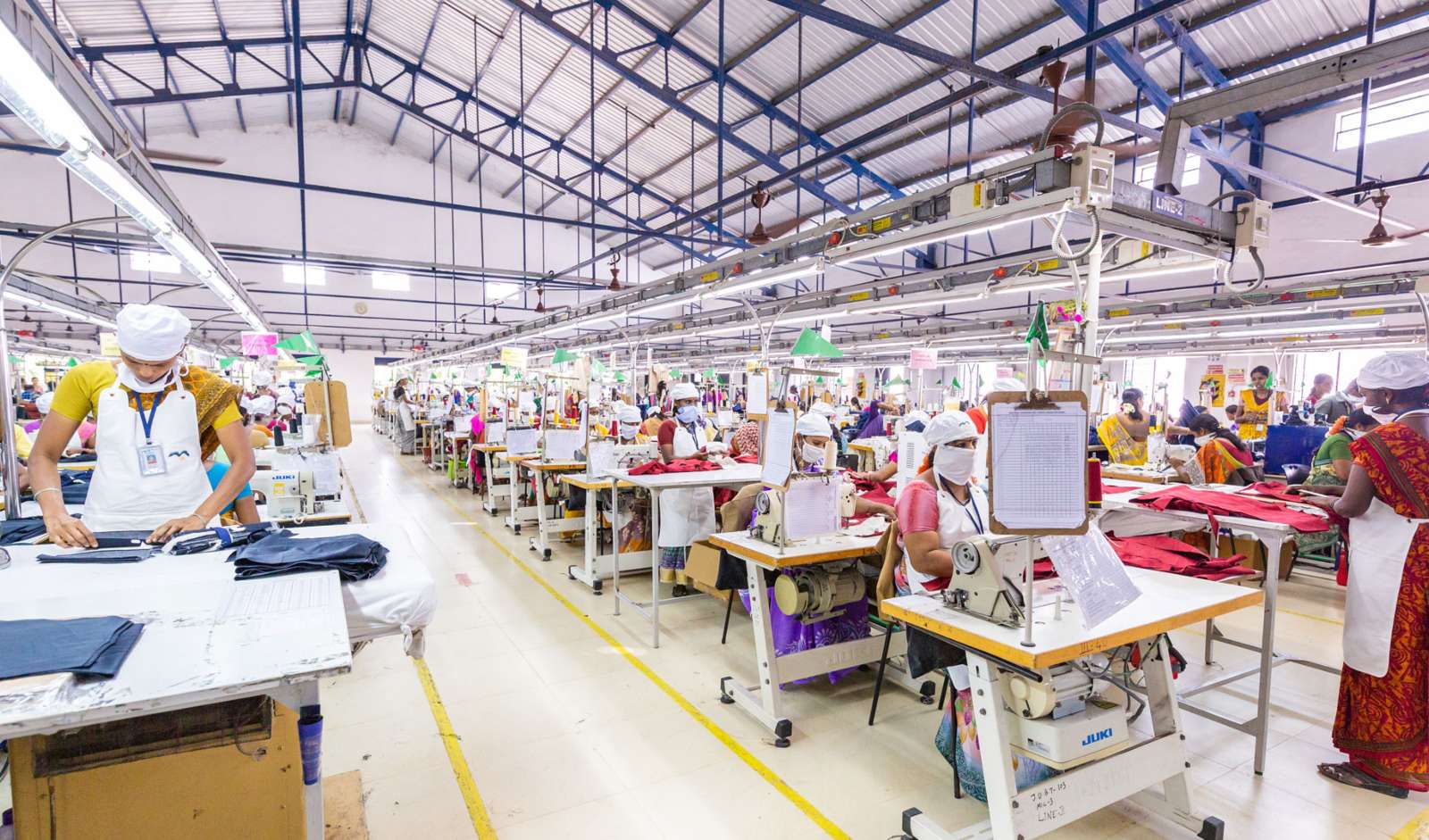
(图片来源于 Indian Retailer;仅供研究参考)
The distinction matters because textile manufacturing and wearing-apparel manufacturing are separate industry classifications. The first covers a broad range of textile production activities, while the second focuses on the manufacture of clothing.
They should not be treated as interchangeable measures of the entire textile and apparel supply chain.
India remains an important global manufacturing market. Its Economic Survey 2025–26 estimates that the textile and apparel industry is worth approximately US$179 billion, contributes close to 2% of GDP and accounts for around 11% of manufacturing gross value added.
The question, therefore, is not whether India has an established textile industry. It does. The more interesting question is why growth in one part of the industry is not translating into equivalent growth in another.
The picture becomes more complicated when export data enters the discussion.
According to the Reserve Bank of India's October 2026 Bulletin, exports of ready-made garments of all textiles increased by 13.7% year on year in September.
CITI's export statistics also show that apparel exports increased by 13.68% in US dollar terms during September. However, its April–September cumulative series recorded a 6.19% decline in dollar terms, while the corresponding rupee-denominated series increased by 3.43%.
This difference is important. A single month's export growth does not necessarily reverse a weaker cumulative trend, and export values cannot be directly compared with an industrial production index.
The Indian Ministry of Textiles also reported that total textile and apparel exports, including handicrafts, reached ₹325,339 crore in FY2025–26, up 1.8% from the previous financial year.
Taken together, these figures describe a market that is changing rather than simply collapsing. Some export categories are recovering, but manufacturing output, export performance and domestic demand are not moving at the same pace.
One explanation comes from the cost and demand environment facing apparel manufacturers.
In a 7 November 2026 report, The Economic Times cited analysis from India Ratings and Research and CRISIL Ratings. The report identified weaker apparel demand, particularly in the US market, and rising input costs as important pressures.
Cotton and polyester prices have increased the cost of garment production. Yarn prices reportedly rose by around 15% during April–September 2026.
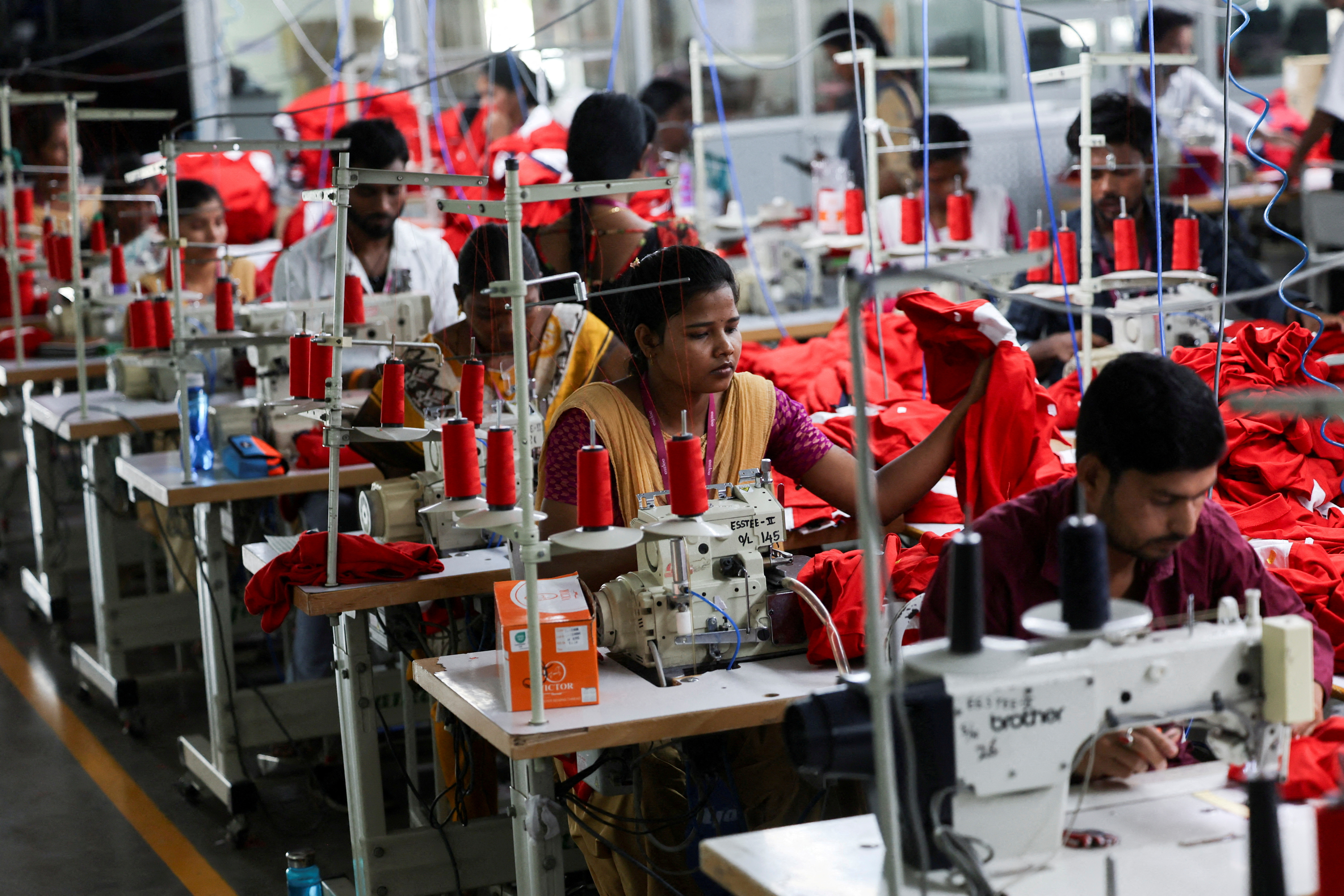
(图片来源于 Rieter;仅供研究参考)
The difficulty for a garment manufacturer is that higher material costs cannot always be passed on to the next buyer.
A retail chain may resist a higher purchase price. A private-label brand may already have committed to a retail price. An independent tailoring business may have limited room to increase the price of a made-to-measure suit.
When the fabric becomes more expensive but the final selling price cannot move at the same pace, the manufacturer faces a narrower margin.
Reducing production, delaying orders or becoming more selective about new business can become commercially necessary.
A Reuters report published on 11 November 2026 provides a more direct view of how international trade uncertainty is affecting Indian garment exporters.
The report examined Orient Craft and Gokaldas Exports, two established manufacturers adjusting their export-market strategies.
Orient Craft's US market exposure had fallen from 84% of sales before the tariff shock to less than 10% at the time of the report.
Gokaldas Exports, meanwhile, was planning to increase Europe's contribution to revenue to 25–30% over the following three to five years.
Reuters also reported that, between April and August 2026, India's textile, apparel and home-furnishing exports to the US fell by 9.8%, while shipments to other markets increased by 3.7%.
The important point is not that Indian manufacturers are abandoning the US. It is that depending heavily on one destination can become a serious business risk when tariffs, buyer pricing expectations and trade policy change.
For manufacturers, market diversification is increasingly part of operational planning. For international buyers, it is another reason to look beyond a supplier's quoted price and understand the markets, customers and production structure behind the business.
India also faces longer-term structural challenges.
The Government of India's Economic Survey 2025–26 identifies several issues in the textile sector:
Government initiatives such as PM-MITRA textile parks and the Production Linked Incentive scheme for man-made fibres and technical textiles are intended to address some of these challenges.
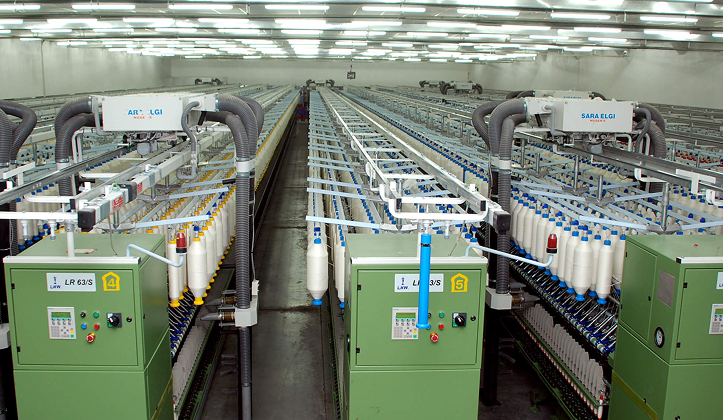
(图片来源于 Birla Cotsyn India Limited;仅供研究参考)
However, policy support and increased textile output do not automatically produce a stronger garment manufacturing ecosystem.
A competitive apparel programme requires more than access to yarn and fabric. It also requires reliable material sourcing, pattern development, skilled production teams, consistent quality control, efficient communication and the ability to meet delivery schedules.
These capabilities are built across the production process, not created by a single increase in upstream output.
For an overseas clothing brand, tailoring shop or private-label business, India's production divergence offers a useful sourcing lesson.
Do not evaluate an entire country as if every supplier has the same capabilities.
Start with the actual product category. A supplier specialising in cotton yarn is not automatically equipped to develop a tailored jacket. A fabric mill may offer excellent materials but have no experience coordinating finished-garment production.
Before placing an order, buyers should examine several practical areas.
Material availability and consistency.
Confirm fabric composition, weight, width, colour availability, finishing and the stability of future supply. A successful first sample is less valuable if the same material cannot be sourced for the next production run.
Development and sampling.
Check whether the supplier can work from measurements, reference garments, technical specifications and pattern adjustments. Sampling should demonstrate that the supplier understands the intended fit and construction, not simply that it can produce a visually acceptable first piece.
Construction and trims.
For custom suits and made-to-measure programmes, interlining, lining, buttons, shoulder construction, pockets, stitching and pressing all affect the final result. These details should be confirmed before bulk production.
Production control and repeat orders.
Ask how measurements, tolerances, workmanship and quality checkpoints are controlled. The second order should remain sufficiently consistent with the approved sample to protect the brand's reputation.
Communication and delivery.
Clear revision procedures, realistic lead times and early communication about material or production problems are essential for businesses that need dependable replenishment.
At Light Source Couture, operated by Suzhou Light Source Clothes & Accessories Co., Ltd. in Suzhou, China, we work with overseas clients on custom suits, made-to-measure programmes, tailored jackets, shirts, overcoats and OEM or private-label garment manufacturing.
Our perspective is that a buyer should not choose a manufacturing partner simply because a country is currently receiving positive industry headlines.
The more important question is whether the specific partner can support the complete project: from fabric selection and pattern development to sampling, fit revisions, trims, construction, quality follow-up and repeat production.
For a small tailoring business, an emerging formalwear brand or an established private-label buyer, this can make a substantial difference. The supplier relationship must support not only the first order but also the next collection and the next replenishment cycle.
India's latest textile and apparel figures do not provide a verdict on the country's manufacturing future. They reveal a more useful lesson: strong material production and strong garment manufacturing are related, but they are not the same thing.
For international buyers, the best sourcing decision begins with understanding that difference—and evaluating the manufacturer against the product they actually need to deliver.
CTA: If you are developing custom suits, made-to-measure collections, tailored jackets, shirts, overcoats or private-label formalwear, Light Source Couture can help you turn your product requirements into a workable manufacturing programme.
 Hot News
2026-11-19
2026-09-07
2026-06-23
2026-06-22
2026-06-04
2026-04-23
Room 610, Building 1, Lvjing Business Plaza, Yuexi Sub-district, Wuzhong Economic Development Zone, Suzhou
Copyright © 2026 Light Source Couture. All rights reserved. Privacy Policy

 EN