×
×
Article Summary: Intertextile’s 2026 Autumn Edition preview placed natural-fibre stretch fabrics from Trabaldo Togna in the luxury-tailoring conversation, including wool, cashmere and mohair without synthetic elastane. This article explains what that signal means for custom-suit buyers: fibre-level elasticity is only the beginning. Recovery, fabric width, pattern balance, lining, pressing, care, testing and repeat-order stability still decide whether a comfortable cloth becomes a reliable product.
“Can we get the comfort without adding elastane?”
That question often arrives after a buyer has handled a beautiful suit cloth and imagined it on a real customer: sitting through a flight, walking between meetings, or wearing the same jacket from morning to dinner. A fabric may feel flexible in the hand. The harder question is whether the finished suit will move, recover and still look composed after the day is over.
That is why the natural-stretch direction highlighted around Intertextile Shanghai Apparel Fabrics – Autumn Edition 2026 deserves a closer look. In its official 10 August preview, Intertextile said Italian mill Trabaldo Togna would present 100% natural-fibre stretch fabrics made from fine wool, cashmere and mohair without synthetic elastane. The same notice described the fabrics as crease-resistant and breathable for luxury tailoring.
The Autumn Edition ran in Shanghai from 25 to 27 August 2026. The event is the news hook, but the useful business question sits one step later: what does a natural-stretch claim change in a custom-suit or private-label development brief?
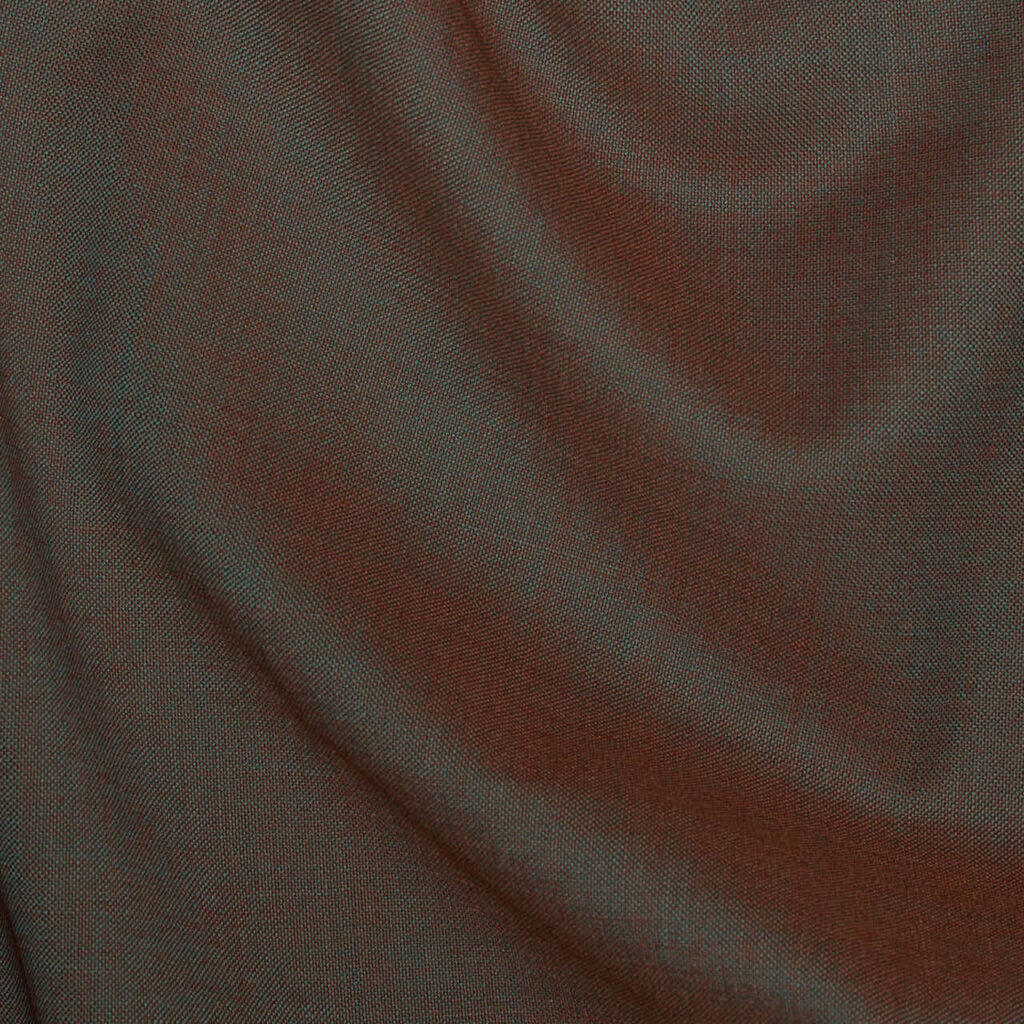
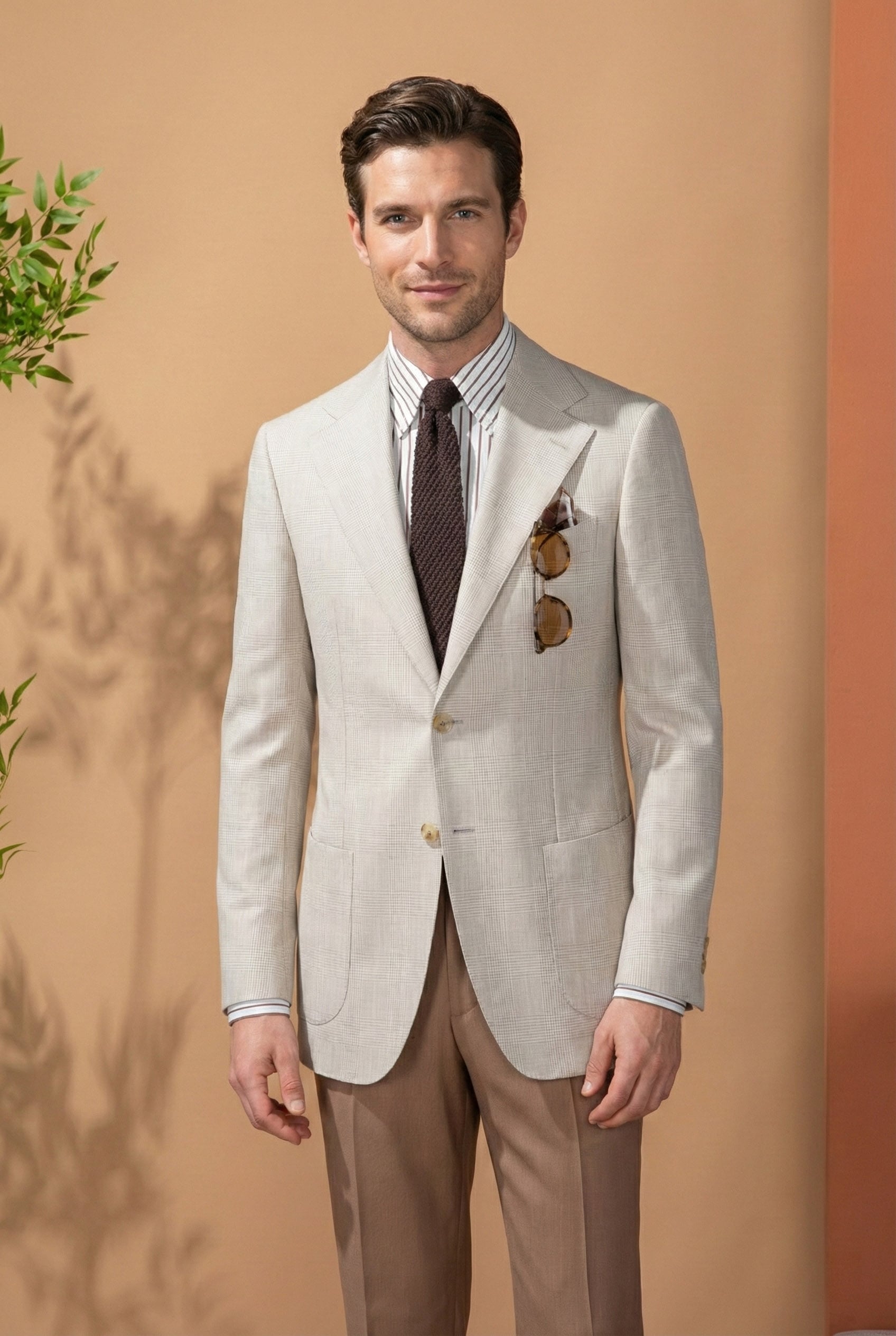
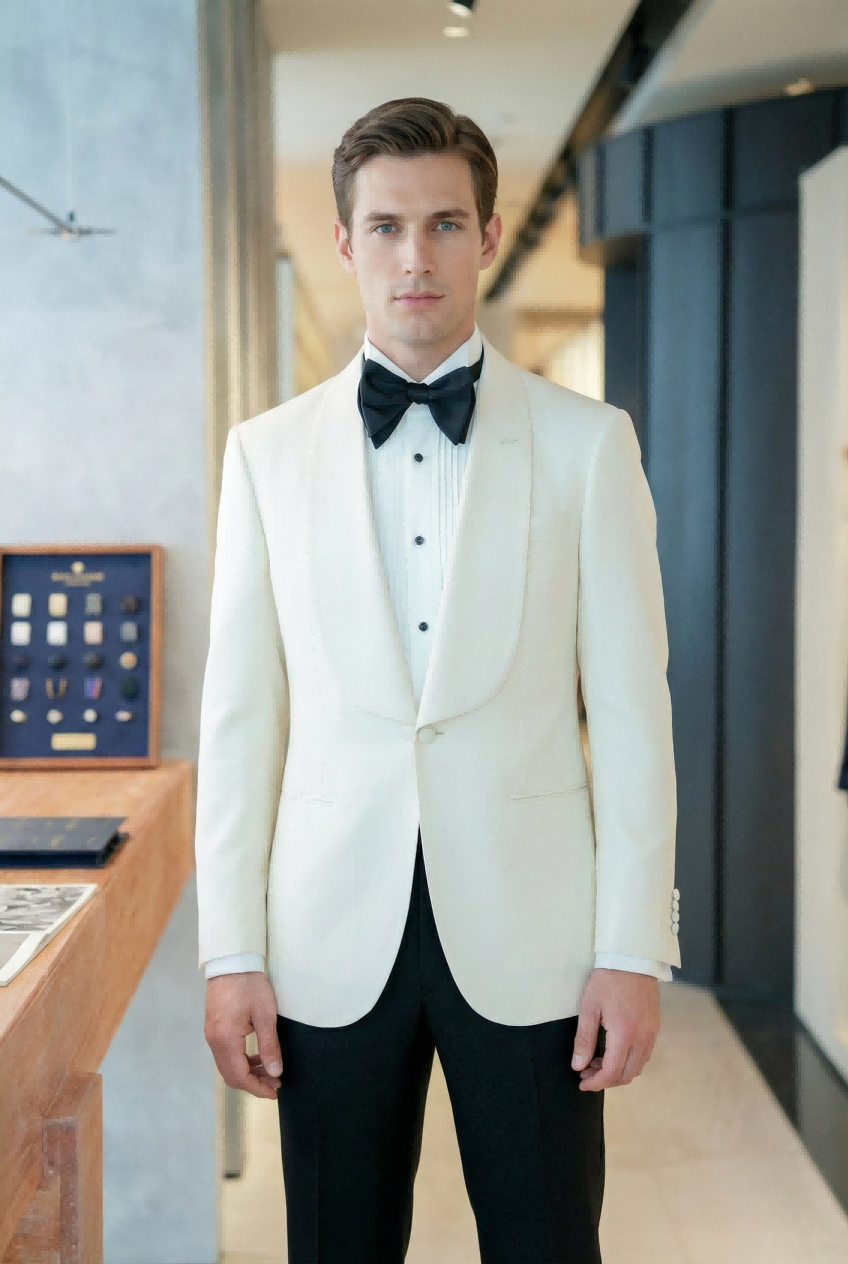
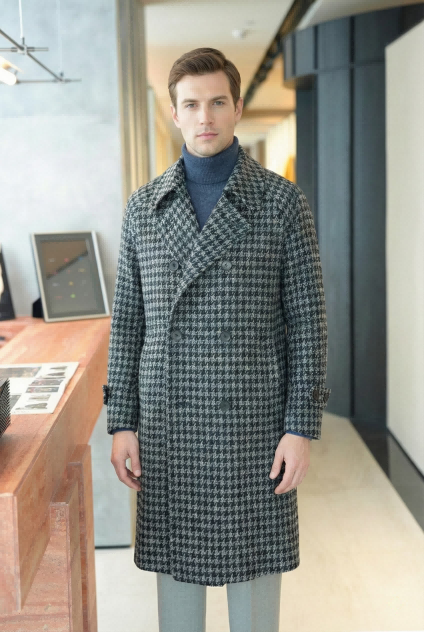
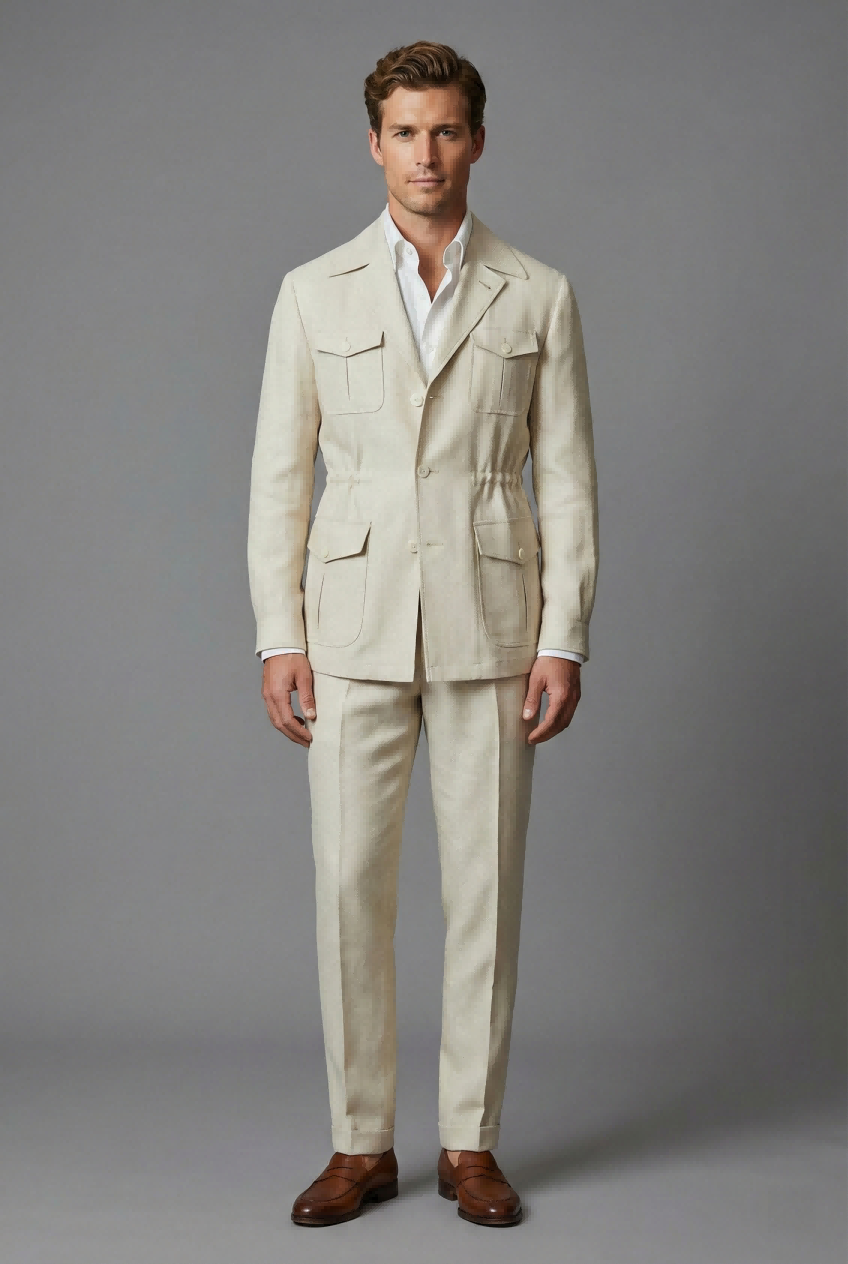
(图片来源于 Trabaldo Togna 2027 男装系列页;仅供研究参考)
Trabaldo Togna’s own history page gives the idea a more specific shape. It says the Estrato wool can extend up to 20% without petroleum-derived synthetic fibres such as elastomers. The page also says some cashmere and flannel fabrics can extend up to 30%, while a normal natural-stretch wool construction reaches roughly 10–12% by using the fibre’s inherent properties.
Those are useful figures, but they need to stay in their proper place. A fabric-level extension percentage is not the same thing as the ease built into a jacket. It is not a promise that trousers will recover after repeated sitting. It does not tell a buyer how the cloth will behave after fusing, pressing, dry cleaning or a change of lining.
The Woolmark Company explains why wool can contribute to this conversation. Its fibre-science guide describes wool’s natural crimp as a spring-like structure that helps the fibre stretch and recover, resist wrinkles and maintain shape. That is a fibre property. A finished suit still depends on the cloth construction and the way the garment is cut and assembled.
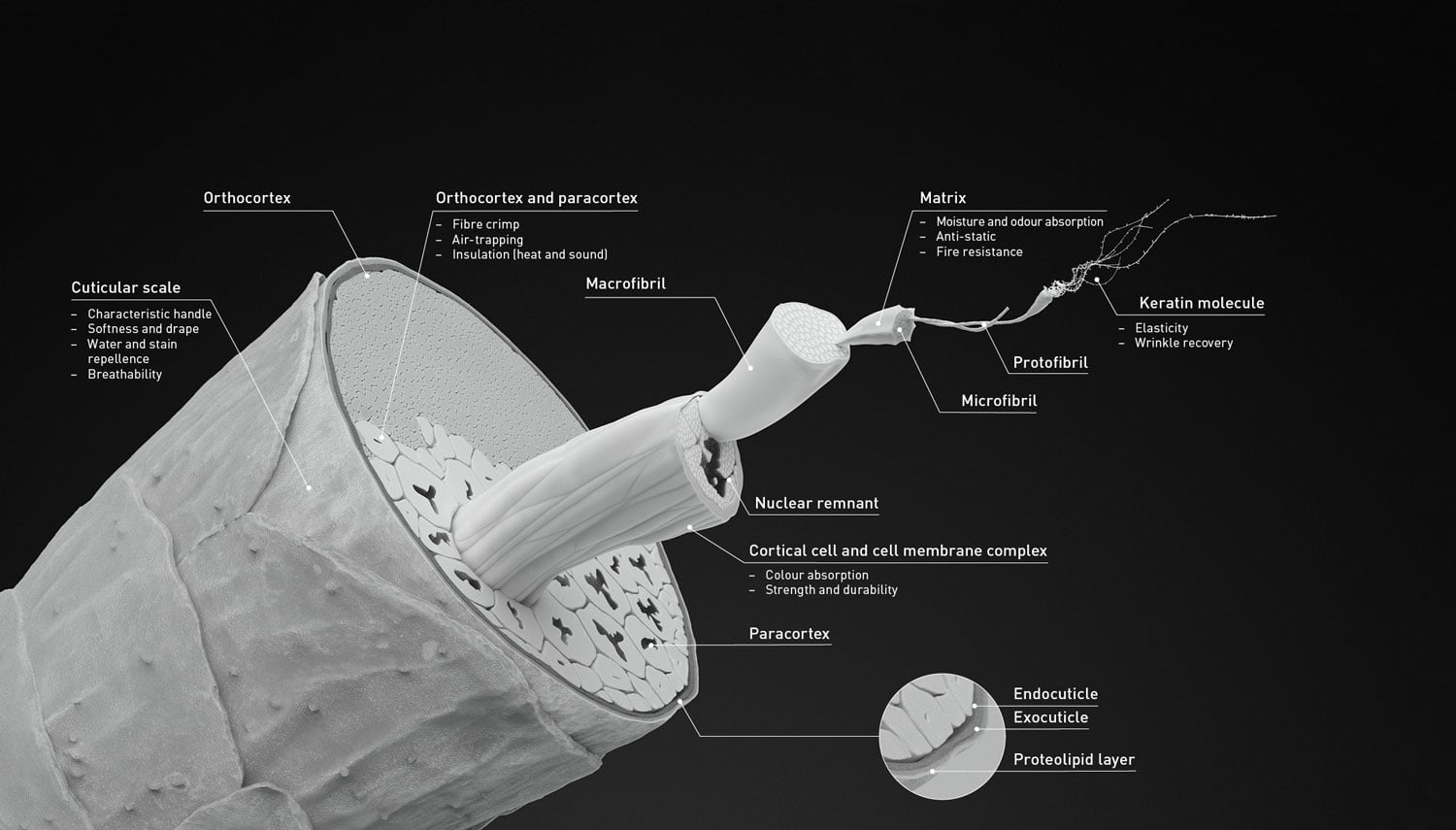
(图片来源于 The Woolmark Company;仅供解释羊毛纤维结构参考)
For a custom-suit buyer, “stretch” usually hides three decisions.
The first is movement. Does the jacket allow a customer to reach, sit and drive without the front pulling or the armhole restricting movement? The second is recovery. After the cloth is held under pressure, does it return closely enough to protect the original silhouette? The third is appearance. Does the suit still look sharp after a full day, or does comfort arrive at the cost of a soft, tired-looking front?
These questions belong in the first sample review. Ask for the fabric composition, width, weight, finish and usable stretch direction. Record the target fit and the amount of ease expected in the chest, waist, sleeve and trouser seat. If the mill provides a test method or recovery figure, keep that document with the sample record. If it does not, do not invent a number from a hand-feel demonstration.
Trabaldo Togna’s 2027 men’s collections page presents Estrato in a range from Super 120’s to Super 180’s and frames it around elegance and comfort after long travel or a demanding day. That range matters because fineness, drape and durability do not move in exactly the same direction.
A finer cloth may support a refined hand and a clean luxury story, but it still needs to hold the intended jacket structure. A travel-suit programme also has to decide whether the cloth will be half-lined or fully lined, how much shoulder support it needs, and which pressing method protects the surface. A natural-stretch fabric can help the wearer. It cannot correct a weak pattern or an unsuitable interlining.
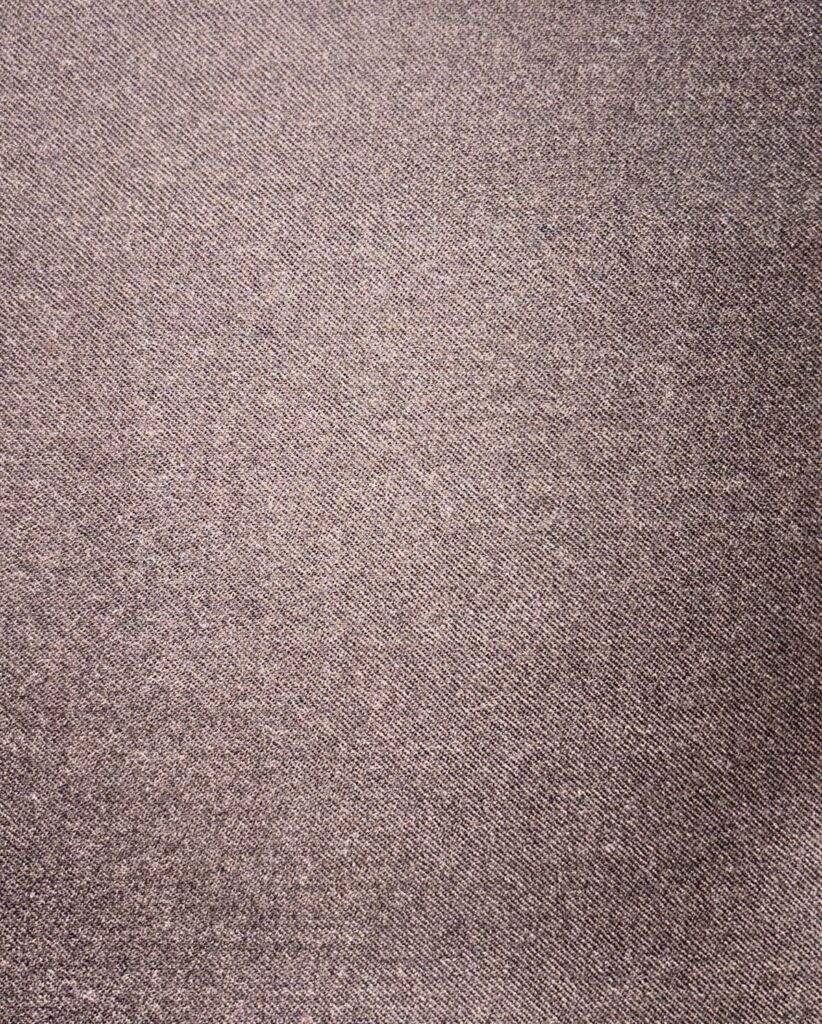
(图片来源于 Trabaldo Togna 2027 男装系列页;仅供研究参考)
The first route is a travel suit. Here the buyer is not simply asking for “stretch wool”. The brief should define the journey: how long the wearer sits, how formal the destination is, whether the jacket must work without a garment bag, and how quickly the suit is expected to look presentable again.
The second route is made-to-measure. A natural-stretch cloth may make movement easier, but the pattern still has to respect the customer’s posture and measurements. The sampling review should compare movement, front balance, sleeve pitch, trouser recovery and the visual line after steaming.
The third route is a private-label formalwear capsule. This is where repeatability becomes more important than a single impressive sample. The buyer needs a clear material specification, approved construction, matching trims, a care position and a plan for shade and hand-feel control across the next production run.
Before approving bulk production, make the cloth pass through the garment system. Cut and sew the intended construction. Apply the actual interlining and lining. Check the front after pressing. Have someone sit, stand, walk and reach in the garment. Leave it hanging, then review the shape again.
For trousers, look at the seat, knee and waistband after movement. For jackets, inspect the shoulder, collar roll, armhole, pocket balance and sleeve recovery. Check whether the cloth creates unexpected shine or distortion under pressing. If the product is expected to be washable or frequently cleaned, agree on the care route before the sample is signed off.
This process also exposes the quieter risks. A fabric may be comfortable but too unstable for a sharp front. A lining may reduce the benefit of the cloth. A button or trim change may shift the price impression. A second lot may feel slightly different even when the nominal composition is unchanged.
Light Source Couture, operated by Suzhou Light Source Clothes & Accessories Co., Ltd. in Suzhou, China, works with overseas clients on custom suits, made-to-measure programmes, tailored jackets, shirts, overcoats and private-label garment manufacturing.
For a project using natural-stretch cloth, our practical work begins by clarifying the wearer, price level and use case. We then compare fabric options, align the pattern and construction, review the sample, coordinate lining and trims, and record what must remain stable in bulk production. The goal is not to turn a material claim into a slogan. It is to make the claim testable inside a product the buyer can sell with confidence.
Natural stretch without elastane is a meaningful sourcing direction because it opens another route to movement, comfort and a cleaner fibre story. The commercial value appears only when the fabric survives the full journey from swatch to sample, from fitting to pressing, and from the first order to the second.
CTA: If you are developing travel suits, custom suits, made-to-measure trousers or private-label formalwear with natural-stretch wool, cashmere or mohair, share your target wearer, price level, use case and fabric reference with Light Source Couture. We can help turn the material idea into fabric comparison, pattern development, sampling, trims and a repeatable OEM production plan.
 Hot News
2026-09-07
2026-06-23
2026-06-22
2026-06-04
2026-04-23
2026-03-23
Room 610, Building 1, Lvjing Business Plaza, Yuexi Sub-district, Wuzhong Economic Development Zone, Suzhou
Copyright © 2026 Light Source Couture. All rights reserved. Privacy Policy

 EN
EN