×
×
Article Summary: HUGO BOSS entered the second half of 2026 with lower sales but better operating quality. Group sales declined 8% on a currency-adjusted basis in H1, while gross margin rose to 63.7%, inventories fell 15%, and free cash flow before leases reached EUR 137 million. This article explains why the brand is prioritizing full-price sell-through, lower assortment complexity, disciplined stores and cash generation, and what the strategy means for formalwear retailers, made-to-measure businesses and manufacturing partners.
When a fashion brand reports lower sales, the headline usually sounds simple: demand is weak, so the business is under pressure.
HUGO BOSS's first-half 2026 numbers require a more careful reading. On a currency-adjusted basis, Group sales fell 8% to EUR 1.810 billion. Q2 sales fell 9% to EUR 905 million, with EMEA down 13% in the quarter. Yet gross margin improved to 63.7% for the half year, inventories were down 15%, and free cash flow before leases reached EUR 137 million.
The message is not that falling sales no longer matter. It is that HUGO BOSS is using a difficult demand period to improve the quality of the business behind the sales line.
(图片来源于 HUGO BOSS official Q2 2026 newsroom;仅供研究参考)
HUGO BOSS reaffirmed its 2026 outlook: currency-adjusted Group sales are expected to decline by a mid- to high-single-digit percentage, while EBIT is expected to range from EUR 300 million to EUR 350 million. Reuters reported that Q2 EBIT of EUR 59 million was above the analyst average of EUR 52 million, even as consumer demand remained subdued.
That combination matters. It suggests management is not trying to buy short-term volume at any price. The official report links the progress to CLAIM 5 TOUCHDOWN, a program focused on profitability, productivity, cash generation and business quality. FashionNetwork also pointed to purchasing efficiency, pricing and stronger full-price sales as contributors to the higher margin, while noting that store closures and a smaller wholesale footprint weighed on sales.
For a formalwear business, this is a familiar tension. Discounting can move a suit or jacket quickly, but it can also train customers to wait for a sale, weaken the brand's price architecture and create an expensive inventory tail. A better product, a clearer assortment and a reliable delivery promise can protect margin more effectively than a permanent promotion calendar.
The 15% inventory reduction is one of the most useful figures in the H1 report. HUGO BOSS said the inventory ratio improved to 23.1% of Group sales. That does not mean a fashion brand should simply own less stock. It means stock should be more closely connected to demand, product role and replenishment logic.
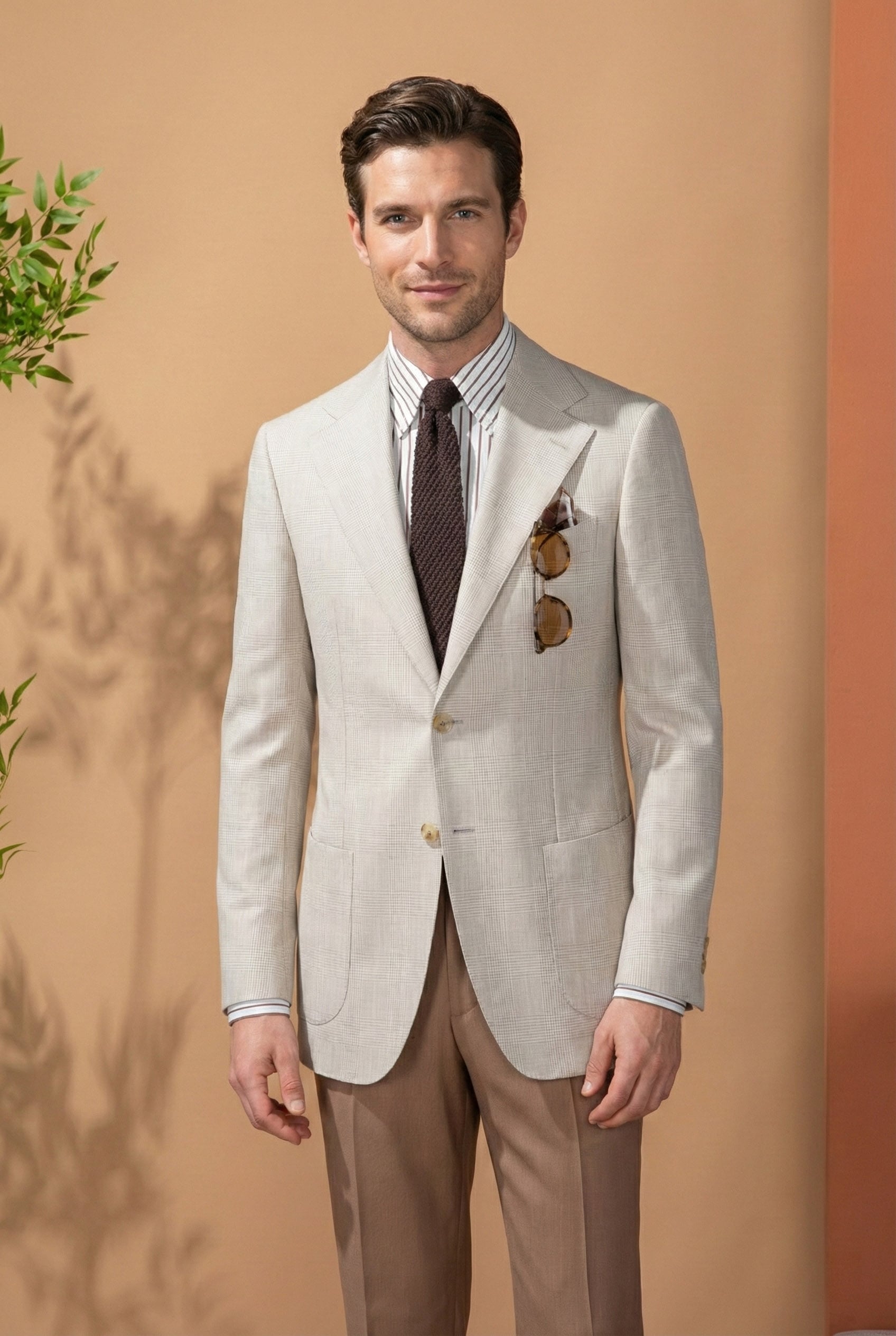
The distinction is especially important in suits and formalwear. A store may need enough core navy, charcoal and black options to support fittings, but it does not need every fabric, lapel, lining and size combination in depth before customer demand is proven. Excess variety can hide slow-moving sizes, duplicate patterns and trims that cannot be reordered consistently.
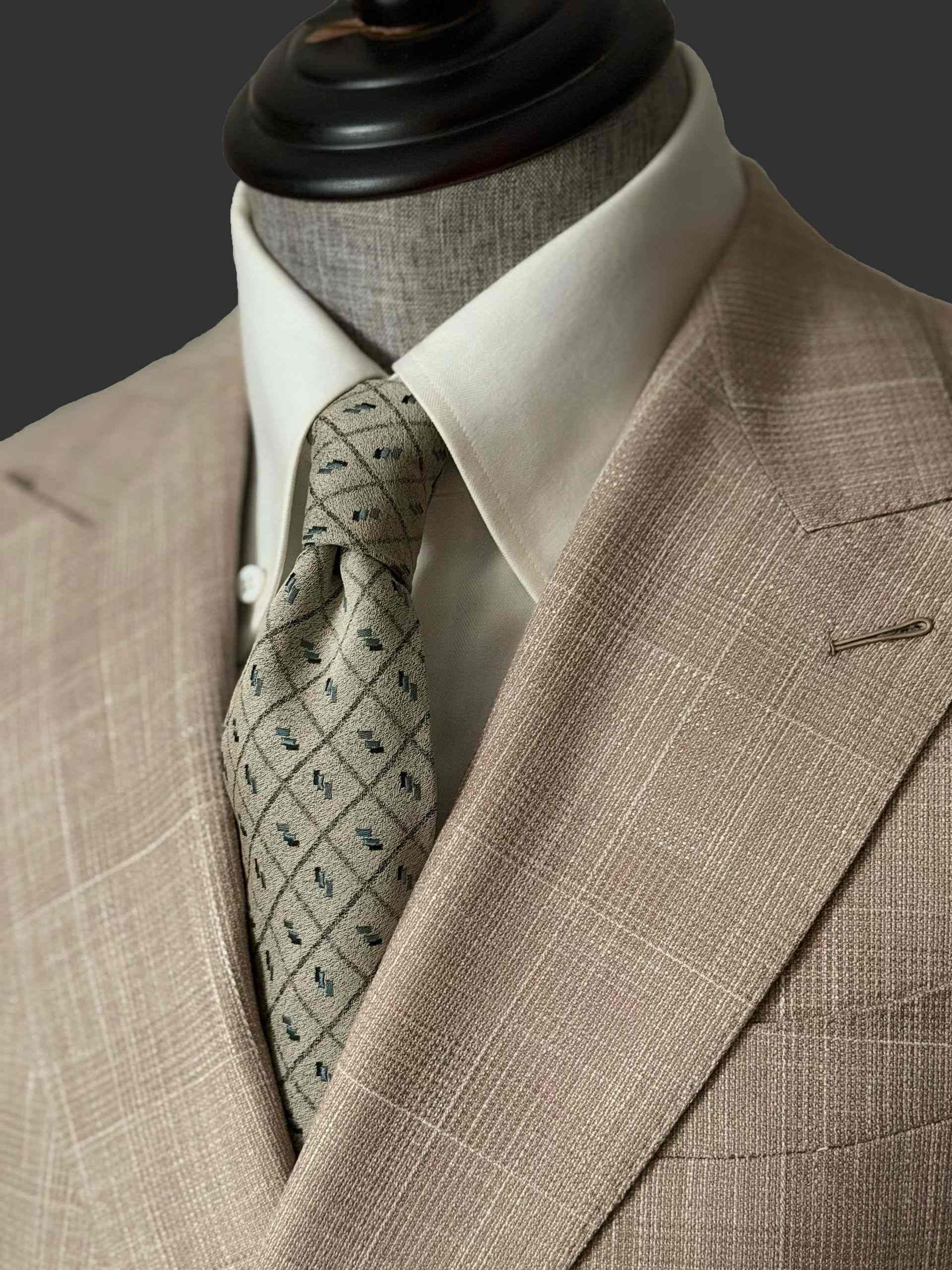
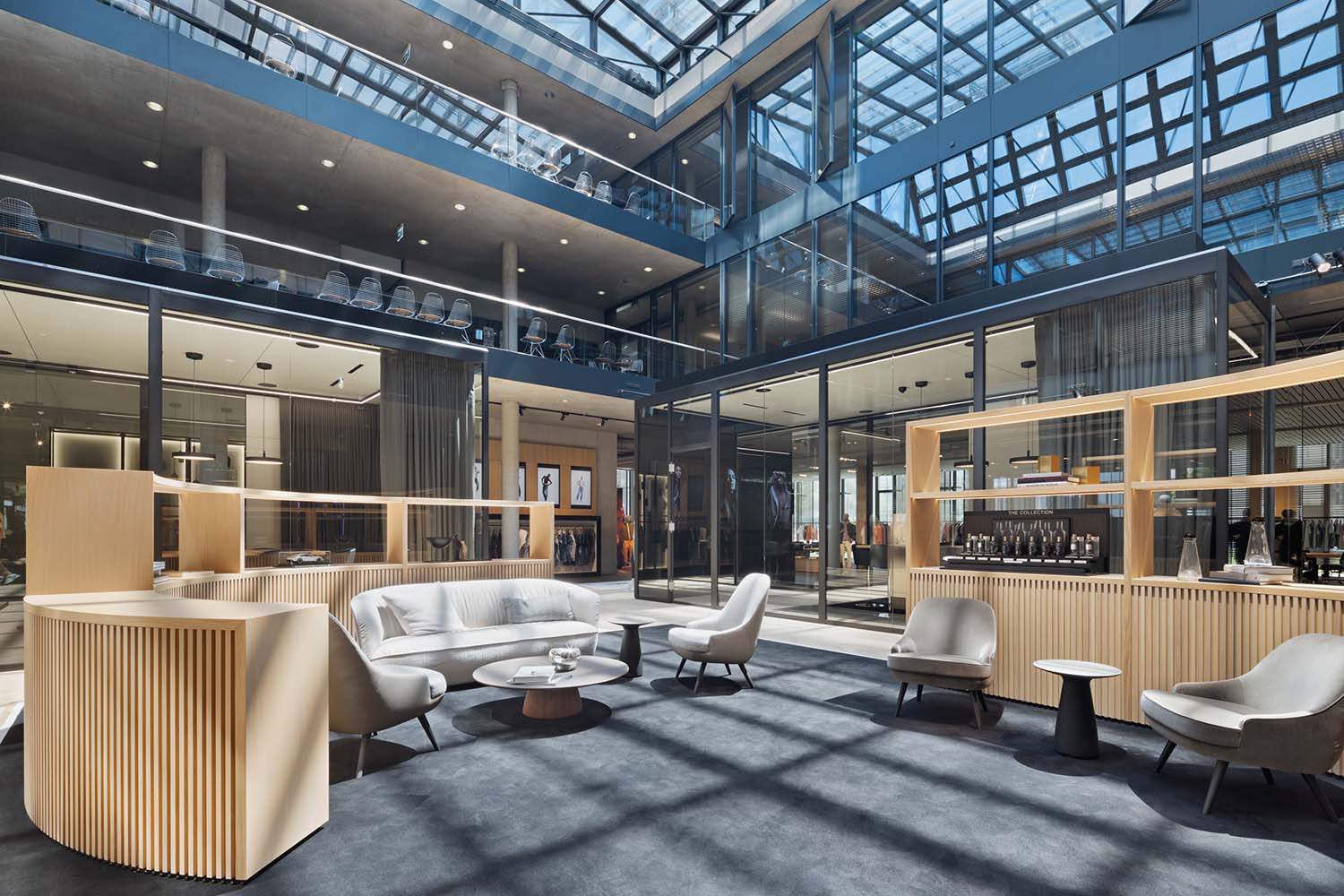
HUGO BOSS's investor materials say the company plans to reduce assortment complexity by about 20% by 2028. For an overseas tailoring shop or private-label formalwear buyer, the practical translation is not “carry fewer products” in the abstract. It is “define a smaller number of repeatable product systems.” A core suit block, a controlled fabric menu, a clear shirt pairing and a documented trim library can serve more customers than a catalogue full of one-off samples.
(图片来源于 HUGO BOSS official media resources;仅供研究参考)
HUGO BOSS's Q2 gross margin rose 200 basis points to 64.9%, and H1 gross margin rose 160 basis points to 63.7%. The company attributes the improvement to execution, purchasing and a stronger full-price mix. These are financial outcomes, but they are also product-development outcomes.
Margin is influenced when a buyer selects a fabric, when a pattern is graded, when a supplier confirms the bill of materials, and when a sample is revised before bulk production. A last-minute change to lining, buttons or construction can create rework. A poorly controlled color standard can create replacement pieces. An unclear size chart can turn a profitable group order into an alteration and return problem.
That is why a manufacturing partner should contribute more than a sample photograph. For custom suits, made-to-measure programs and private-label formalwear, the useful work includes fabric selection, pattern development, sampling, fit revision, trims and label coordination, inspection and production follow-up. These steps help a retailer protect the price it wants to charge because the product is more repeatable and the delivery risk is easier to manage.
HUGO BOSS generated EUR 105 million of free cash flow before leases in Q2 and EUR 137 million in H1. In a cautious consumer market, cash is not an abstract finance number. It determines whether a brand can fund the next collection, keep key materials available, invest in stores or absorb a delayed wholesale payment without adding unnecessary debt.
For a growing tailoring business, the same principle appears in smaller decisions. Large speculative fabric buys, too many development samples and unstructured deposits can consume working capital before a sale is confirmed. A staged process—brief, fabric approval, sample, fit sign-off, controlled bulk order and documented reorder—keeps cash connected to evidence of demand.
This also changes how a store should judge a supplier. The lowest sample price is not always the lowest project cost. A partner that communicates clearly, keeps pattern and material records, confirms production checkpoints and supports repeat orders can reduce the cash tied up in corrections, urgent freight and unusable stock.
(图片来源于 HUGO BOSS official media resources;仅供研究参考)
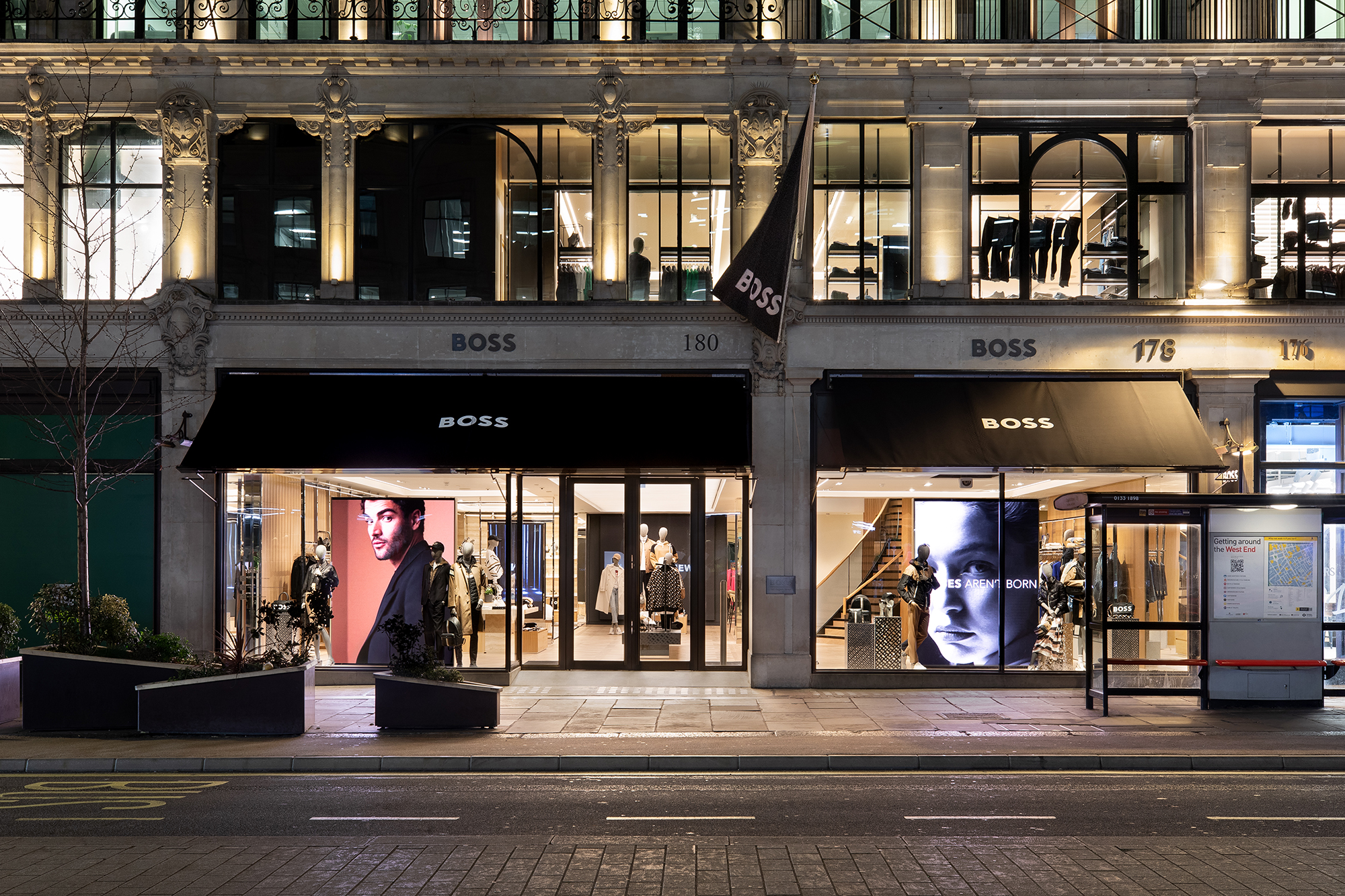
HUGO BOSS reported a net reduction of 21 stores in H1, including six in Q2. Comparable brick-and-mortar sales were down 6% on a currency-adjusted basis in Q2, better than the overall retail decline of 8%, while wholesale fell 10%. The figures show that physical stores are not being abandoned, but the network is being evaluated more selectively.
The investor presentation refers to rent-to-sales, pay-to-sales and persistent underperformance when discussing future store decisions. That is a useful reminder for independent formalwear retailers: a store is not healthy merely because it is busy. It must turn appointments, fittings and alterations into a productive order flow, and its assortment must earn the space it occupies.
HUGO BOSS also reported 16% growth in HUGO BOSS XP members to more than 14 million, with younger consumers accounting for nearly half of new members. This shows why customer acquisition and product discipline must work together. A strong campaign can bring people in, but the business still needs products, service and replenishment that convert attention into repeat purchases.
HUGO BOSS is a global brand with resources that a small tailoring shop does not have. The lesson is therefore not to copy its organization chart. It is to borrow the sequence of decisions.
First, protect full-price value with a focused assortment and convincing fit. Second, connect inventory to proven customer demand instead of adding SKUs because a catalogue feels empty. Third, treat cash flow as part of product planning: every material, sample and production commitment should have a reason and a next step. Finally, choose a manufacturing partner that can make a product repeatable, not just attractive once.
At Light Source Couture, our team supports overseas buyers with custom suits, made-to-measure development, shirts, overcoats, fabric selection, trims and private-label garment manufacturing from Suzhou, China. The right project may be a small wedding-party capsule, a stable core suit block or a broader formalwear program. In each case, the commercial question is the same: can the product be made clearly, delivered consistently and reordered without rebuilding the process?
HUGO BOSS's H1 2026 results do not prove that sales growth is unimportant. They show something more useful for a difficult market: when demand is uncertain, margin, inventory and cash flow become the operating foundation that makes future growth possible.
CTA: If you are reviewing a custom-suit, made-to-measure or private-label formalwear program, start with the product system behind the first order. Light Source Couture can support fabric selection, pattern development, sampling, trims, quality follow-up and repeat production from Suzhou, China. Send us your target customer, price level, expected quantity and delivery window so we can discuss a practical development route.
 Hot News
2026-09-07
2026-06-23
2026-06-22
2026-06-04
2026-04-23
2026-03-23
Room 610, Building 1, Lvjing Business Plaza, Yuexi Sub-district, Wuzhong Economic Development Zone, Suzhou
Copyright © 2026 Light Source Couture. All rights reserved. Privacy Policy

 EN
EN