×
×
Article Summary: Intertextile Shanghai Apparel Fabrics – Autumn Edition will return from 25–27 August 2026 with climate-adaptive textiles highlighted inside its expanded Functional Lab. The same official programme lists Essential Suits & Shirts and a Premium Wool Zone, creating a useful sourcing question for apparel buyers: how can temperature and humidity management move from a technology claim into a repeatable garment product? This article connects official event signals with Outlast and Woolmark research, then translates them into practical decisions for custom suits, shirts, coats, sampling and OEM production.
Intertextile Shanghai Apparel Fabrics – Autumn Edition will take place from 25 to 27 August 2026 at the National Exhibition and Convention Center in Shanghai. Its 14 May announcement is notable for more than the event date. The show says its expanded Functional Lab will spotlight climate-adaptive textiles, including innovations in temperature and humidity regulation, while its wider programme also lists Essential Suits & Shirts and a Premium Wool Zone.
That does not prove that the whole apparel industry has already moved to climate-adaptive materials. It does show that performance, comfort and commercial suiting are being placed in the same sourcing environment. For a buyer, this is the more useful signal: function is being discussed less as a laboratory idea and more as a question of product selection, sampling and repeat production.

(图片来源于 Intertextile Shanghai Apparel Fabrics官方Functional Lab页面;仅供研究参考)
Messe Frankfurt describes the 2026 edition through four broad themes: Fashion Forward, Performance Textiles, Sustainability and Textile Future. In the official press release, climate-adaptive textiles sit inside the Performance Textiles discussion, alongside temperature and humidity regulation. The statement also connects the zone to ageing demographics, highlighting comfort, ease of care, lightweight performance and everyday practicality.
The featured-product-zone page adds commercial context. Functional Lab is described as a showcase for smart, outdoor and sports fabrics, performance textiles and innovative production technology, with more than 100 exhibitors expected. Essential Suits & Shirts is positioned around accessible everyday fashion, practical suiting and shirting fabrics, while Premium Wool gathers high-end wool and wool-cashmere fabrics for shirting and womenswear.
The important point is not that a navy business suit will suddenly become sports equipment. It is that buyers are being encouraged to ask a better question: which comfort or climate problem does this material solve, for which customer, in which garment, at what cost and with what evidence?
“Climate-adaptive” is a useful umbrella term, but it should not be treated as a magic label. In practical sourcing, it can refer to several different mechanisms.
One route is moisture management. A fibre or fabric can absorb water vapour, move it away from the skin or allow it to evaporate without creating a clammy feel. Another route is thermal buffering: a material can store or release heat as the wearer’s condition changes. A third route is construction. Open structures, lighter weights, breathable linings, partial lining, ventilation details and a suitable fit can change the microclimate even when the fibre itself is conventional.
The sourcing implication is simple: ask for the mechanism and the test method, not only the marketing adjective. “Cooling,” “breathable” and “temperature control” can describe very different outcomes. A buyer needs to know whether the claim concerns next-to-skin wear, an outer layer, a static laboratory test or a dynamic activity-and-rest situation.
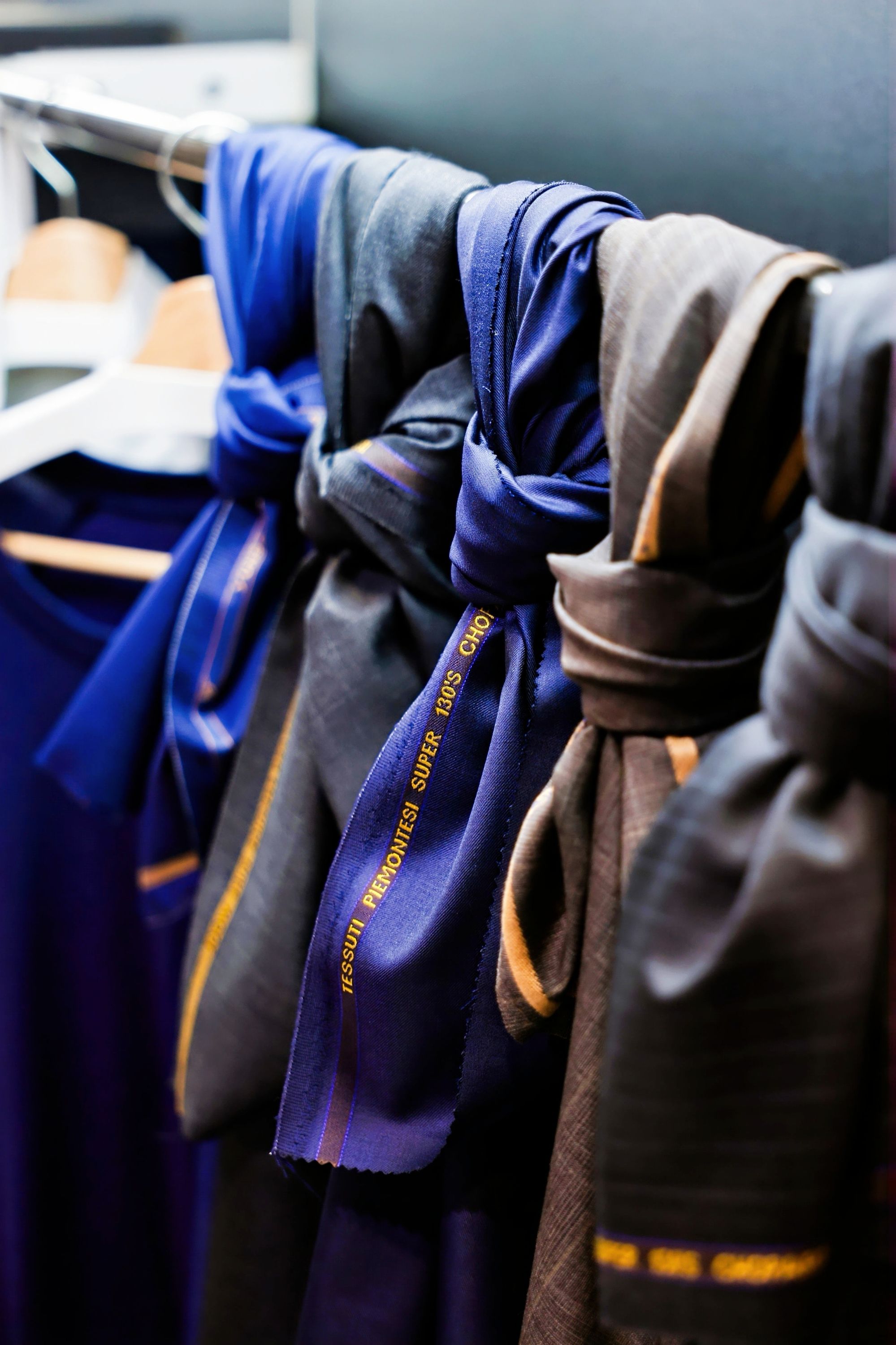
(图片来源于 Intertextile Shanghai Apparel Fabrics官方展会页面;仅供研究参考)
Outlast Technologies describes its temperature-regulating materials as a proactive heat-management system. Its official page says microencapsulated natural wax can capture and store body heat, then release it again when the body cools. Outlast also reports independent testing that found up to 48% less sweating in various final applications. That is a supplier-reported result for specified applications and tests, not a promise that every Outlast-treated suit will deliver the same percentage.
The page includes a concrete case study. Walero combined Outlast temperature regulation with a flame-retardant Protal material for racing underwear. In tests performed with Cranfield University, the company reports lower heart rate, breathing, core temperature and a 40% reduction in sweat compared with a standard Nomex base layer. The case is motorsport rather than office suiting, but it demonstrates the kind of product logic buyers should look for: a defined heat problem, a defined garment layer and a defined test comparison.
Woolmark's research provides a different route. Its natural-breathability fact sheet explains that wool absorbs water vapour, reacts to changes in body temperature and can absorb up to 35% of its weight before feeling wet. It also says wool fabrics can move 25% more moisture away from the skin than polyester in warm, dry conditions, equivalent to an ambient temperature difference of up to four degrees Celsius.
Woolmark's dynamic-breathability research is especially relevant to travel, commuting and event dressing. In a four-year study led by North Carolina State University, 100% wool garments were tested against cotton, viscose and polyester in activity and rest phases. The official summary says wool had the highest capacity to support a change from 45% to 80% relative humidity and maintained better thermal comfort during the resting phase. Another Woolmark newsroom summary reports moisture-buffering performance 96% better than polyester, 45% better than cotton and 26% better than viscose. Those findings belong to the cited studies and fibre compositions; they should be used as evidence for a design conversation, not copied as a blanket guarantee.
The step from a technology page to a sellable suit is where many development programmes become vague. A material only creates value when the garment, customer and use case are clear.
For a lightweight travel suit, the brief may prioritise moisture comfort during airport movement, changing indoor temperatures and long sitting. The right answer could be a breathable wool blend, a specific finishing treatment, a lighter construction or a combination of fabric and lining choices. For a summer business jacket, the priority may be lower weight, air permeability and a clean shoulder without excessive structure. For an overcoat used across shoulder seasons, temperature buffering and layering compatibility may matter more than maximum cooling.
Each brief should lead to a small comparison set rather than a large sample wall. Record fibre composition, weight, width, colour, finish, hand feel, crease recovery, care requirements, test data and minimum order conditions. Then make the material into the intended garment. A swatch that feels comfortable in a hand is not enough evidence for a fully lined jacket.
Buyers should evaluate the whole garment system. A breathable face fabric can lose its advantage if the lining blocks air movement or if the pattern creates pressure at the chest and armhole. A temperature-regulating layer can be misplaced if it is selected for a next-to-skin application but used as a loose outer shell. A lightweight cloth may look attractive in a sample but require reinforcement that changes the final weight and cost.
This is where a capable OEM or custom-suit partner adds practical value. The work includes pattern development, fit revision, lining selection, seam and trim decisions, label coordination, inspection and production follow-up. The objective is not to make a technical garment look like a sports product. It is to keep the intended comfort benefit while protecting drape, appearance, durability and repeatability.
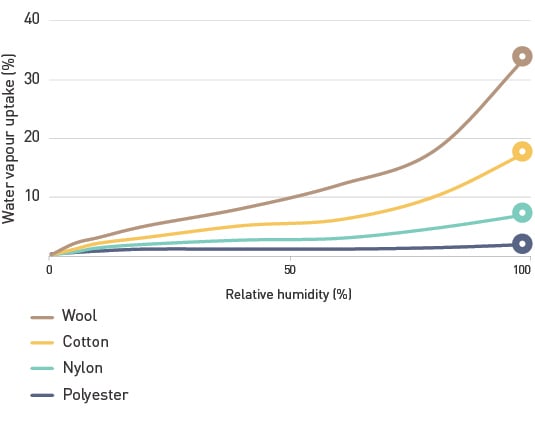
(图片来源于 The Woolmark Company官方研究页;仅供研究参考)
First, ask what comfort problem the material is designed to address: heat, humidity, after-chill, odour, weight or ease of care. Second, ask which layer and end use were tested. Third, ask whether the claim survives the proposed dyeing, finishing, lamination, pressing and care process. Fourth, ask how the fabric behaves at the intended garment weight and with the proposed lining. Finally, ask whether the same construction and material can be reordered with consistent colour, hand feel and lead time.
These questions turn a trend into a purchasing workflow. They also reduce the risk of paying for a sophisticated fibre while delivering an ordinary or uncomfortable product because the rest of the garment was not engineered around it.
The commercial opportunity is not limited to technical outdoor brands. Climate variation affects wedding parties, business travellers, hospitality uniforms, event staff, commuter wardrobes and customers who move between air-conditioned offices and hot streets. A practical product may be a washable travel suit, a lighter summer jacket, a breathable shirt, a versatile overcoat or a small private-label capsule with a clear comfort story.
At Light Source Couture, our team supports overseas buyers with custom suits, made-to-measure development, shirts, overcoats, fabric selection, trims and private-label garment manufacturing from Suzhou, China. We do not treat a trade-show theme as a substitute for a product brief. The useful starting point is the target customer, climate, price level, quantity and delivery window. From there, a buyer can compare fabrics, build a sample, review fit and construction, and decide whether the performance claim is worth carrying into a repeatable order.
Intertextile Shanghai's 2026 programme is therefore best read as an invitation to improve the sourcing question. Climate-adaptive textiles may remain a broad category, and every claim still needs a test and a garment context. But when Functional Lab, everyday suiting and premium wool appear in the same official sourcing environment, comfort is no longer only a technical afterthought. It is becoming part of how a product is specified, priced and made.
CTA: If you are evaluating a climate-adaptive fabric for custom suits, travel tailoring, shirts, overcoats or a private-label capsule, start with the use case and the test evidence behind the fabric. Light Source Couture can support fabric selection, pattern development, sampling, linings, trims, quality follow-up and repeat OEM production from Suzhou, China. Send us your target climate, customer, price level, quantity and delivery window to discuss a practical development route.
 Hot News
2026-09-07
2026-06-23
2026-06-22
2026-06-04
2026-04-23
2026-03-23
Room 610, Building 1, Lvjing Business Plaza, Yuexi Sub-district, Wuzhong Economic Development Zone, Suzhou
Copyright © 2026 Light Source Couture. All rights reserved. Privacy Policy

 EN
EN